- Orders containing live animals will be shipped Monday/Tuesday/Wednesday (heater included!)
Dicronorrhina derbyana conradsi
(vittata form)
( Kolbe, 1909 )
Kingdom: Animalia
Phylum: Arthropoda
Class: Insecta
Order: Coleoptera
Family: Scarabaeidae
Subfamily: Cetoniinae
Genus: Dicronorrhina
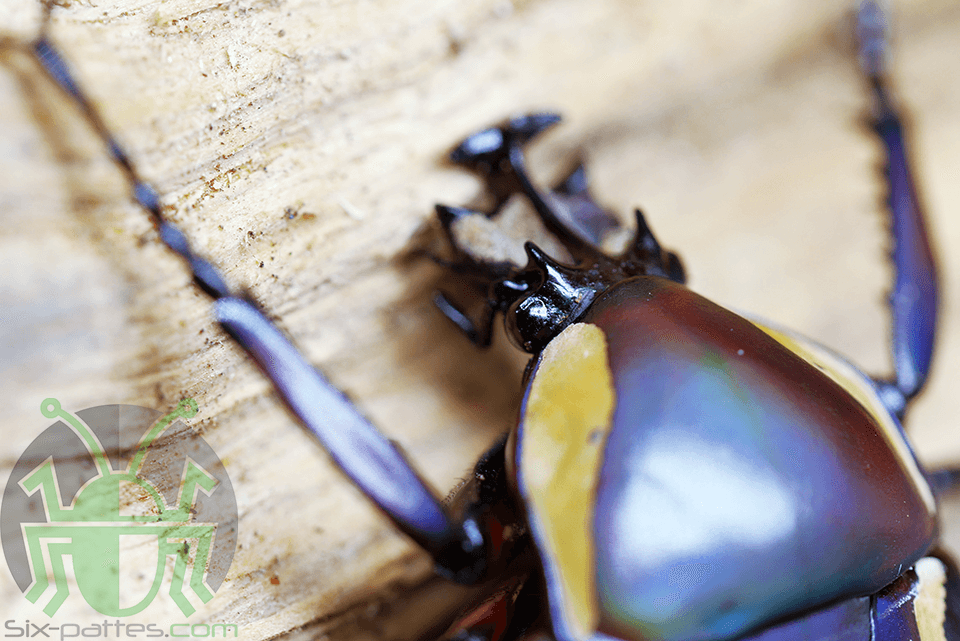
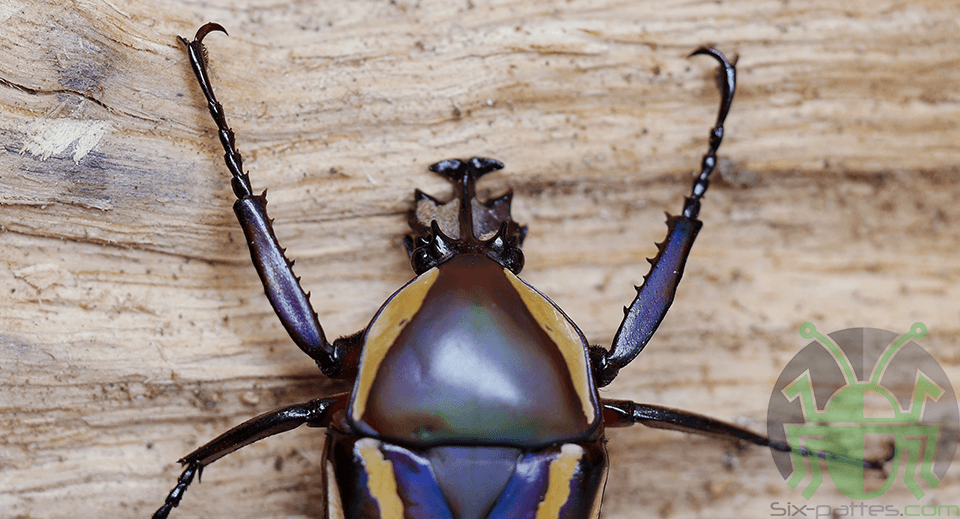
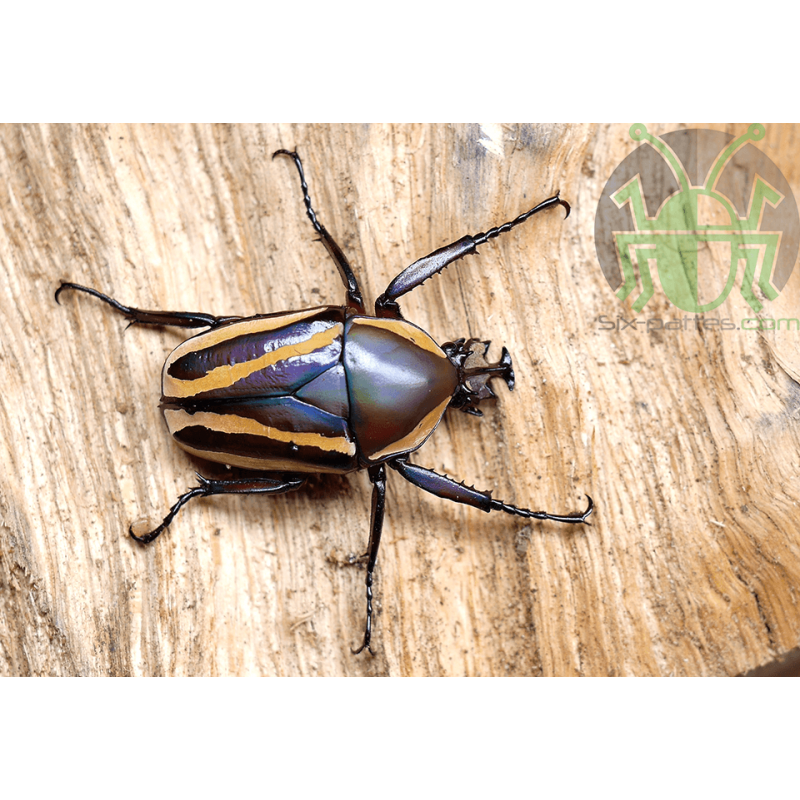
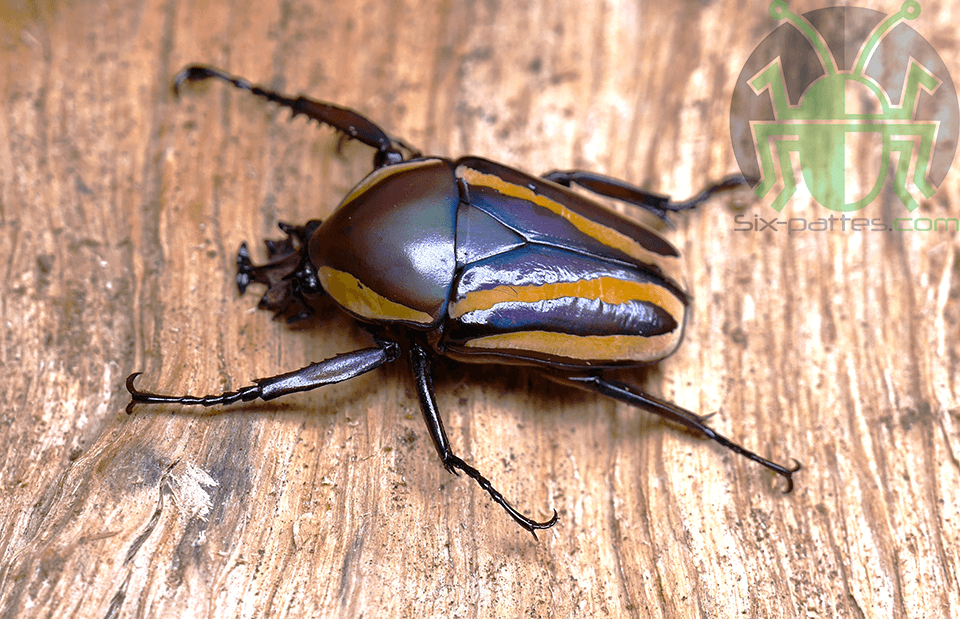
Subspecies very similar to Dicronorrhina derbyana layardi except that conradsi is purple/blue-purple and with white/yellowish bands on the pronotum and elytra. Medium in size, it measures between 3.5 and 5 cm.
Dicronorrhina larvae have a much larger body relative to the head (compared to other flower beetle species). They also have the particularity of having hair.
The shells are made in the middle of the substrate and are not attached to the walls . They are not smooth because they are made with large elements of the substrate (or excrement for example). See photo below.
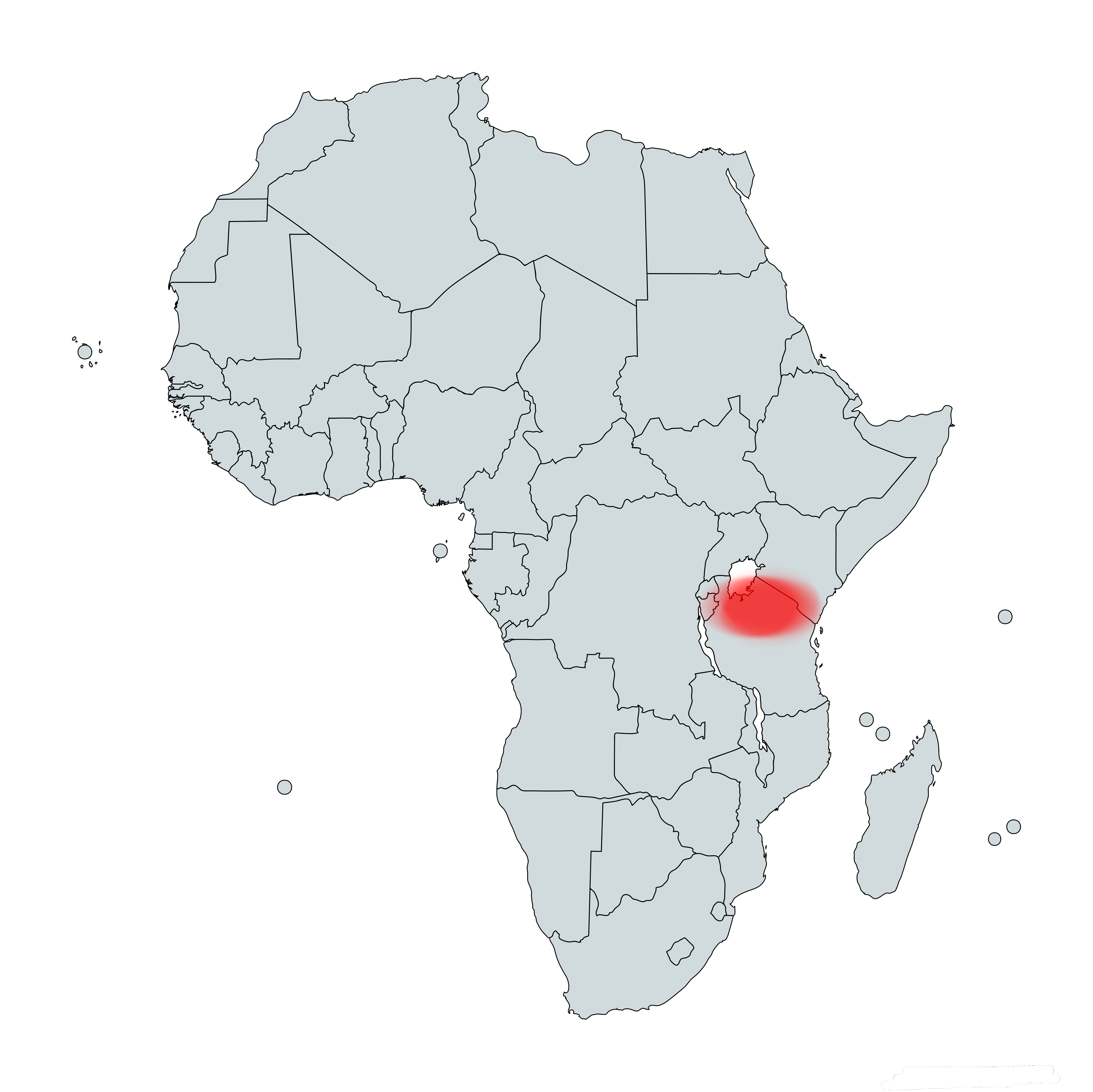
This species can be found in East Africa and mainly in the north of Tanzania (on Ukerewe Island in Lake Victoria for example).
Several variations
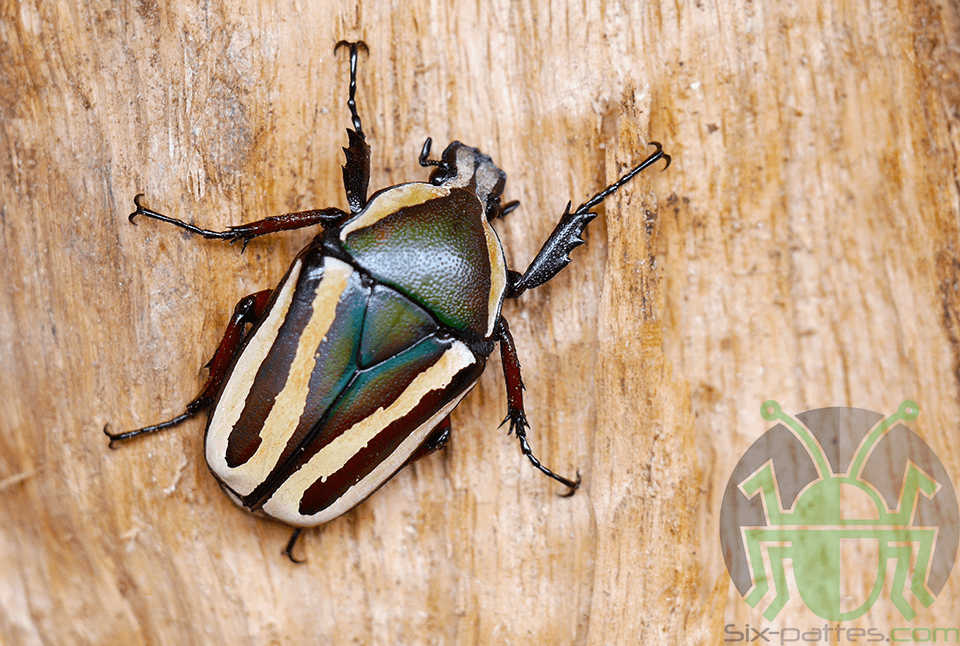
This is the vittata variation from Ukerewe Island in Lake Victoria. The subspecies Dicronorrhina derbyana conradsi normally has no (or only traces of) white bands on the pronotum and elytra. It is a rather dark indigo colour and is native to the Masai region of Kenya and the Serengeti region of Tanzania.
Special features:
Easy / moderately easy breeding
The cycle is longer than most other species to start. Be careful of excess humidity for the substrate of the larvae (Risk of mortality) and the shells (Risk of malformation). Favor a substrate that is drier than usual.
What you might need:
01. Breeding
For larvae: Plastic boxes with ventilation. Provide a quantity of substrate adapted to the number of larvae. For example, for 10 Dicronorrhina derbyana conradsi larvae: provide a box of at least 10L. At the L3 stage, it is possible to provide 1.5L per larva, in order to avoid renewing the substrate too often.
For shells: It is possible to leave the shell in the breeding box of the larval stage . Otherwise it can be transferred to another box. In all cases, the container must be properly ventilated.
For adults: Provide a terrarium adapted to the number of individuals. For 2/3 couples, provide a terrarium of approximately 50x40x50 (LxWxH) with ventilation on the lid. Also provide approximately 20cm of substrate minimum. Also provide branches for movement.

The ground should not be completely flat because the beetles that fall on their backs die quickly because they can no longer turn around. It is therefore very important to fill it with bark, stones or other materials and not to flatten the substrate.
Temperature: for optimal conditions 23/24°C but breeding possible between 20°C and 28°C.
Humidity:
For larvae: provide a very slightly damp/dry substrate.
During pupation: provide a slightly drier substrate.
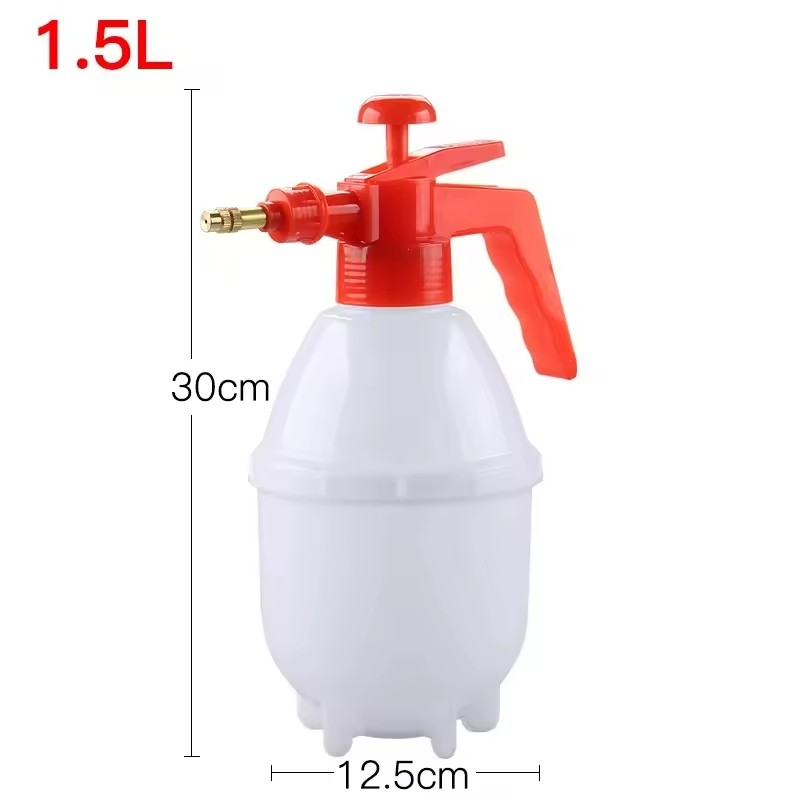
For adults: Provide a very slightly damp substrate. If the terrarium is well ventilated, provide a little spray of water every 2 to 3 days.
Lighting: Classic lighting required for adults (bulb, spotlight, tube, etc.)
For larvae: Classic flower beetle substrate: decomposed and crushed oak, beech or possibly chestnut leaves. The larvae are saproxylophagous and feed on decomposing materials (wood, leaves). The larvae can appreciate a mixture of "classic" fine substrate with a coarser substrate. They will transform into shells more easily. To obtain larger imagos, it is possible to add 10% horse manure. (Be careful of mold development)
For adults: Fruits (mainly banana) or beetle jelly. Possible supplement with pollen. To be renewed as often as possible as soon as the food begins to deteriorate.
Incubation
1 to 2 weeks
Development
From 7 to 10 months
Nymphosis
2 months approximately
Imago lifespan
3 to 6 months
02. Please note
Sexing: The male has a straight horn at the end of its head. The female has no horn, has a flat head for "rummaging" in the substrate, and is smaller than the male.
Prolificacy/Reproduction: Average prolificacy if conditions are optimal. Seems less prolific than Dicronorrhina derbyana layardi. If conditions are good, it is possible to obtain 20 - 30 larvae per female or even more in some cases. The first spawning occurs 2 to 4 weeks after hatching.
Cannibalism: Absent