16

Eudicella schultzeorum

€4.00

0
0/5 - 0 reviews
Buying this product you will collect €1.00 with our loyalty program. Your cart will total €1.00.
Stage

Volume discounts

Quantity Discount You Save
10 5% Up to €2.00
20 10% Up to €8.00
Quantity

The minimum purchase order quantity for the product is 3.

Eudicella Schultzeorum

(Allard, 1991)

Kingdom: Animalia

Phylum: Arthropoda

Class: Insecta

Order: Coleoptera

Family: Scarabaeidae

Subfamily: Cetoniinae

Genus: Eudicella

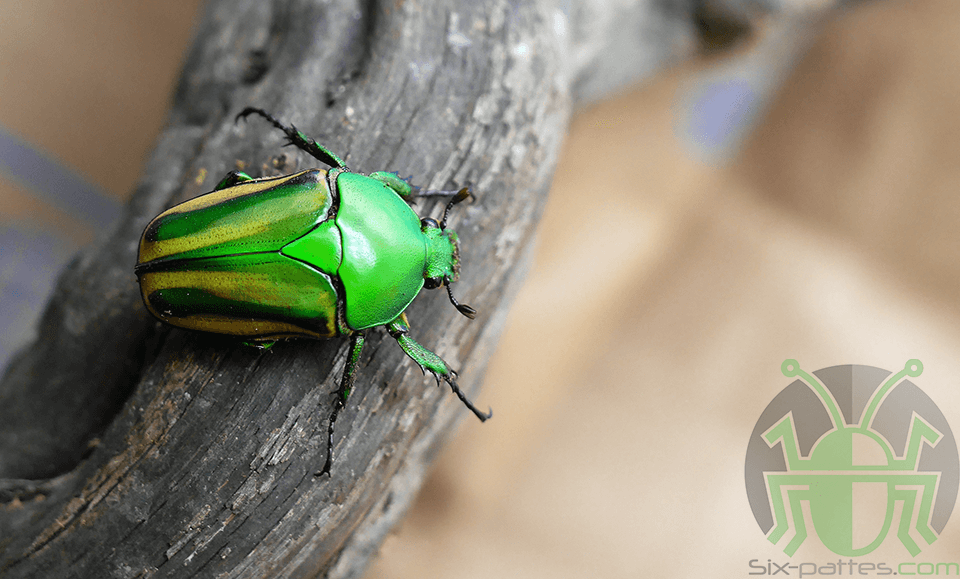
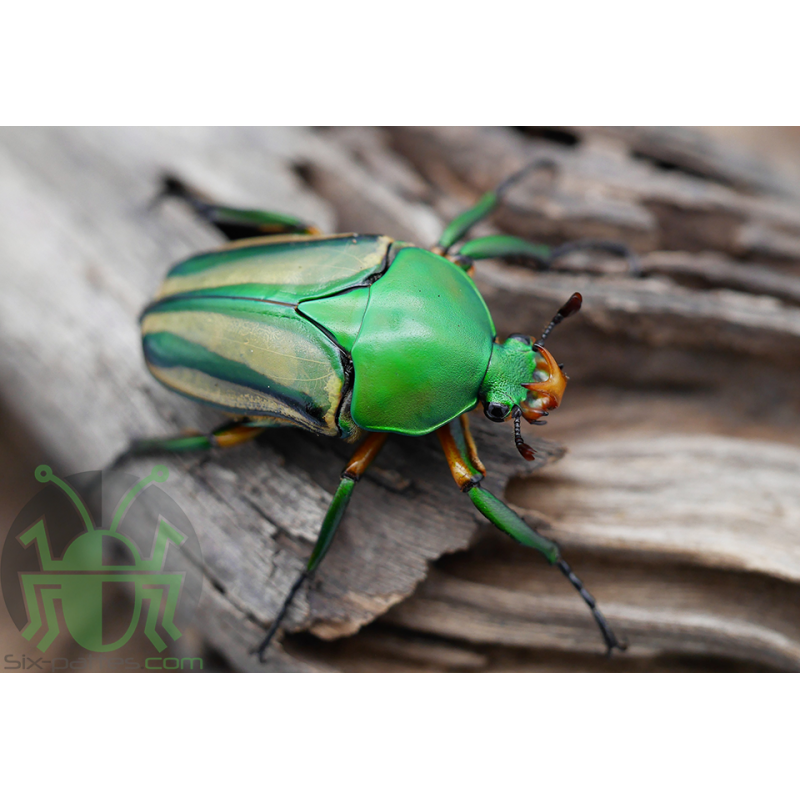
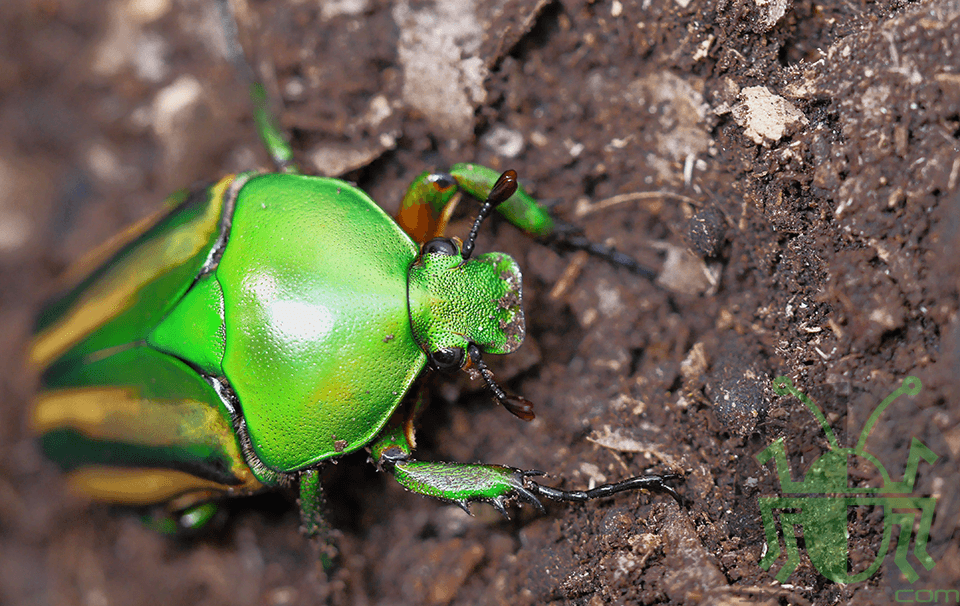
Very similar to Eudicella morgani except that Eudicella schultzeorum has white/yellowish bands on its elytra. These bands are more or less marked and sometimes only cover part of the elytra. It measures 3 to 5 cm (for the largest specimens).

The larva has a brown/orange spot on the end of its abdomen. This is often present in Eudicella .

The shells are often made at the bottom of the substrate and are attached to the walls.

It is found in humid environments in forest areas of parts of central and west Africa.

Difficulty of breeding
Easy

Special features:

Easy to breed

Active during the day

There is a risk of cannibalism between the larvae if they lack food and are raised in too small a volume. They can also be raised individually to avoid any risk.

It is best to keep one male for every two females. Males may fight among themselves and disturb the female when she is feeding or laying eggs.

The little taxonomy info

The genus Eudicella is composed of many species and subspecies. It is sometimes very difficult to correctly identify specimens from their country of origin because there are strong similarities. In addition, there may also be differences in the same subspecies depending on the geographical locations.

In order to find your way around, you must therefore observe physical traits such as color, shape, horn, wings, but also the aedeagus, which is the male's reproductive organ. This requires real knowledge of the subject!

Also, specimens in breeding can come from hybridization and therefore from a mixture between different species, this complicates identifications.

Here, the species Schultzeorum is to be taken as an indication.

What you might need:

01. Breeding

For larvae : Plastic boxes with ventilation. Provide a quantity of substrate adapted to the number of larvae.

For example, for 10 larvae: provide a box of at least 10L . To avoid the risk of cannibalism, it is possible to raise them individually.

For the nymphs : Once in the shell, you can either leave them in the same box as the larvae or transfer them to another ventilated container. To do this, you will need to reposition the shell in the substrate.

For adults: Provide a terrarium adapted to the number of individuals. For 1 or 2 couples, provide a terrarium of 40x30x40 (LxWxH) with ventilation on the lid. Also provide approximately 15-20cm MINIMUM of substrate. Remember to add branches for movement.

The ground should not be completely flat because the beetles that fall on their backs die quickly because they can no longer turn around. It is therefore very important to fill it with bark, stones or other materials and not to flatten the substrate.

Temperature: For optimal conditions 23/24°C but breeding possible between 20°C and 28°C.

Humidity:

For larvae: Provide a slightly damp substrate.

During pupation: Provide a slightly drier substrate.

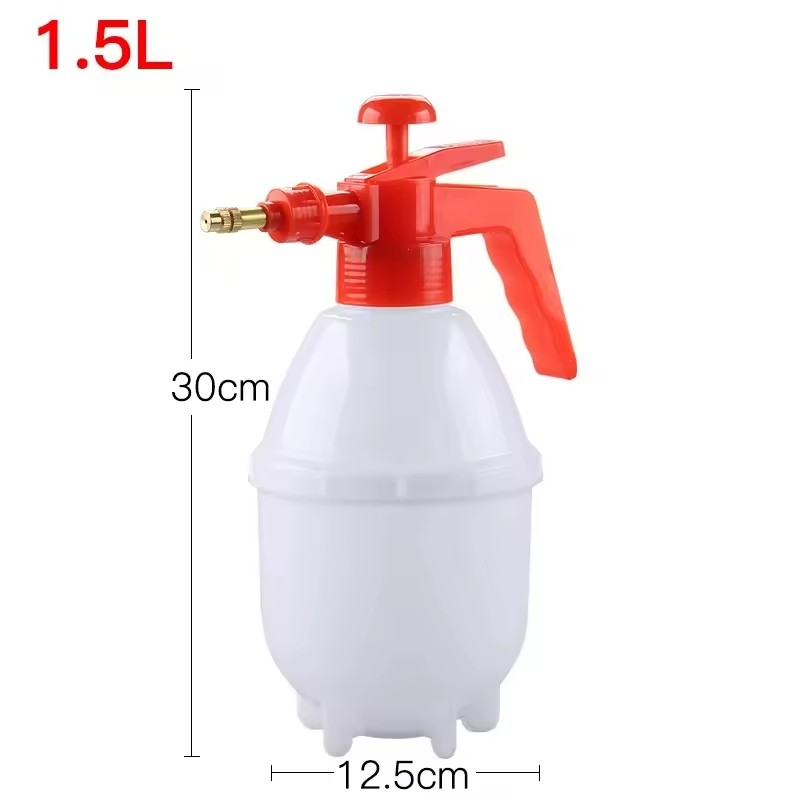
For adults: Provide a slightly damp substrate. If the terrarium is well ventilated, provide a small spray of water every 2 to 3 days.

Lighting: Conventional lighting required for adults (bulb, spotlight, tube, etc.) A lack of light can reduce or even make reproductions disappear.

For larvae: Classic flower beetle substrate: decomposed and crushed oak, beech or possibly chestnut leaves. The larvae are saproxylophagous and feed on decomposing materials (wood, leaves) . If the larvae lack food, there is a risk of dying them or obtaining small specimens. The substrate will need to be renewed as soon as there is too much excrement.

For adults: Fruits (mainly banana) or beetle jelly. Possible supplement with pollen. To be renewed as often as possible as soon as the food begins to deteriorate.

A group of Eudicella schultzeorum

Incubation

ABOUT 10-20 days

Development

From 3 months to 4 months

Nymphosis

2 months approximately

Imago lifespan

4 to 5 months

A female

02. Please note

Sexing: Sexing adult Eudicella schultzeorum is easy since males have a clearly visible forked horn. In addition, females are slightly smaller than males and do not have a horn.

In larvae, the Herold's organ (chitinous terminal point of the abdomen) is clearly visible in stage 3 larvae and can help to recognize the sex of the flower beetle .

Prolificacy, mating and laying: Average prolificacy if optimal conditions. A female lays approximately 20 to 40 eggs.

Cannibalism: Possible because if the larvae lack food and if they are in a reduced volume there is a risk of cannibalism.

Eudicella schultzeorum

€4.00

Reviews (0)

No customer reviews for the moment.


Only registered user can add review. Login