- Orders containing live animals will be shipped Monday/Tuesday/Wednesday (heater included!)
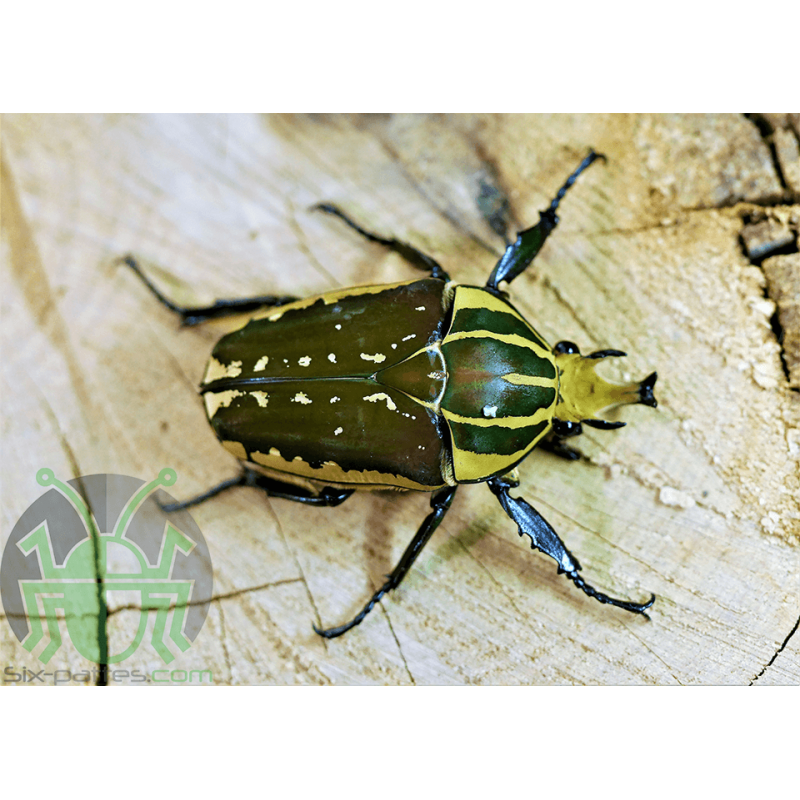
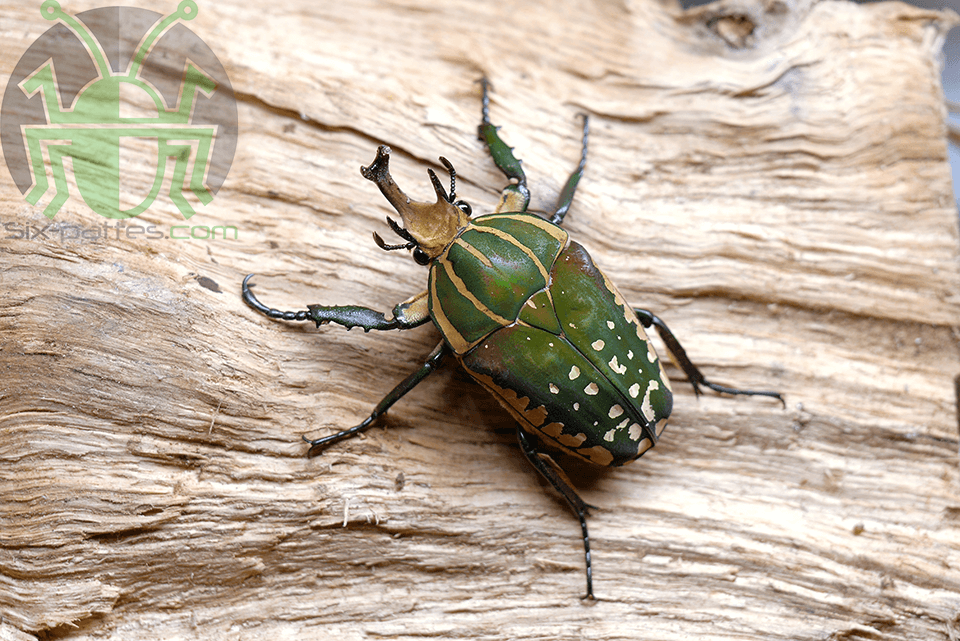
Mecynorhina polyphemus confluens
(Kraatz, 1890)
Kingdom: Animalia
Phylum: Arthropoda
Class: Insecta
Order: Coleoptera
Family: Scarabaeidae
Subfamily: Cetoniinae
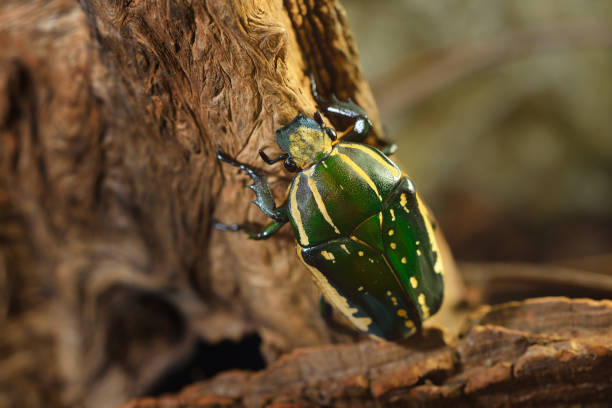
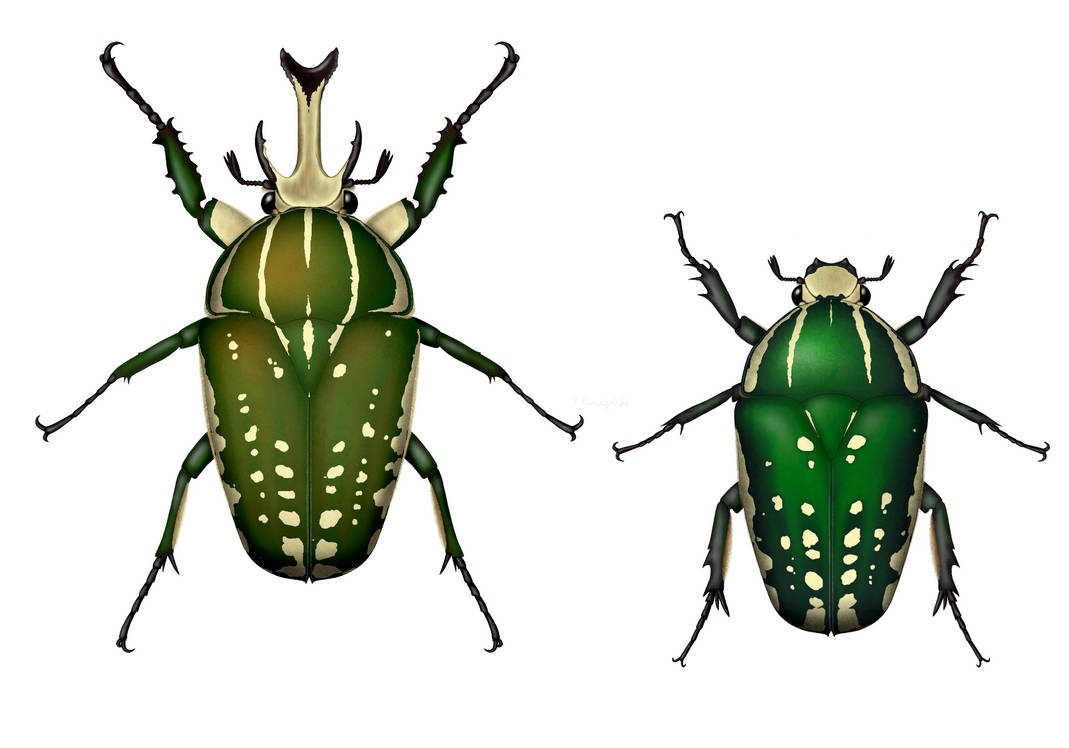
Large cetonia. Males can measure from 35 to 80 mm and females from 45 to 50 mm.
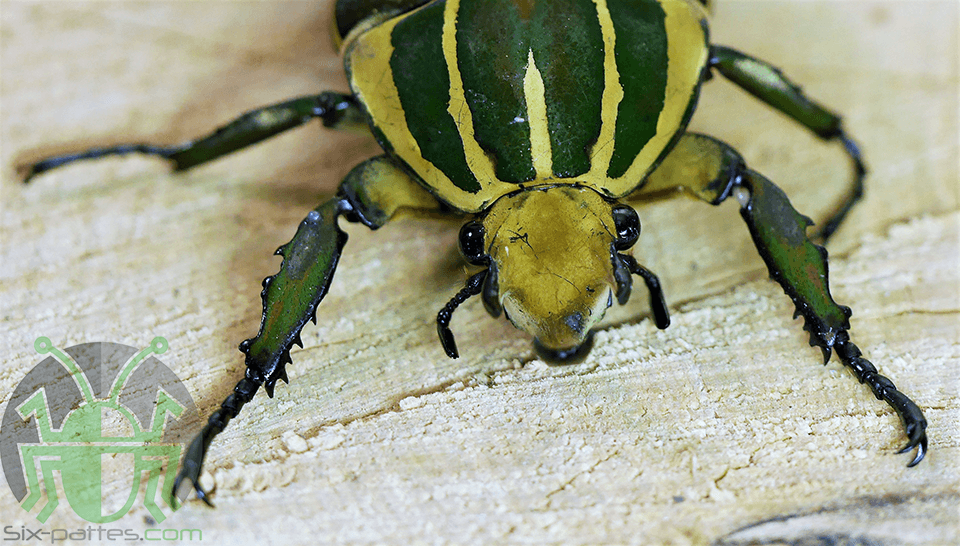
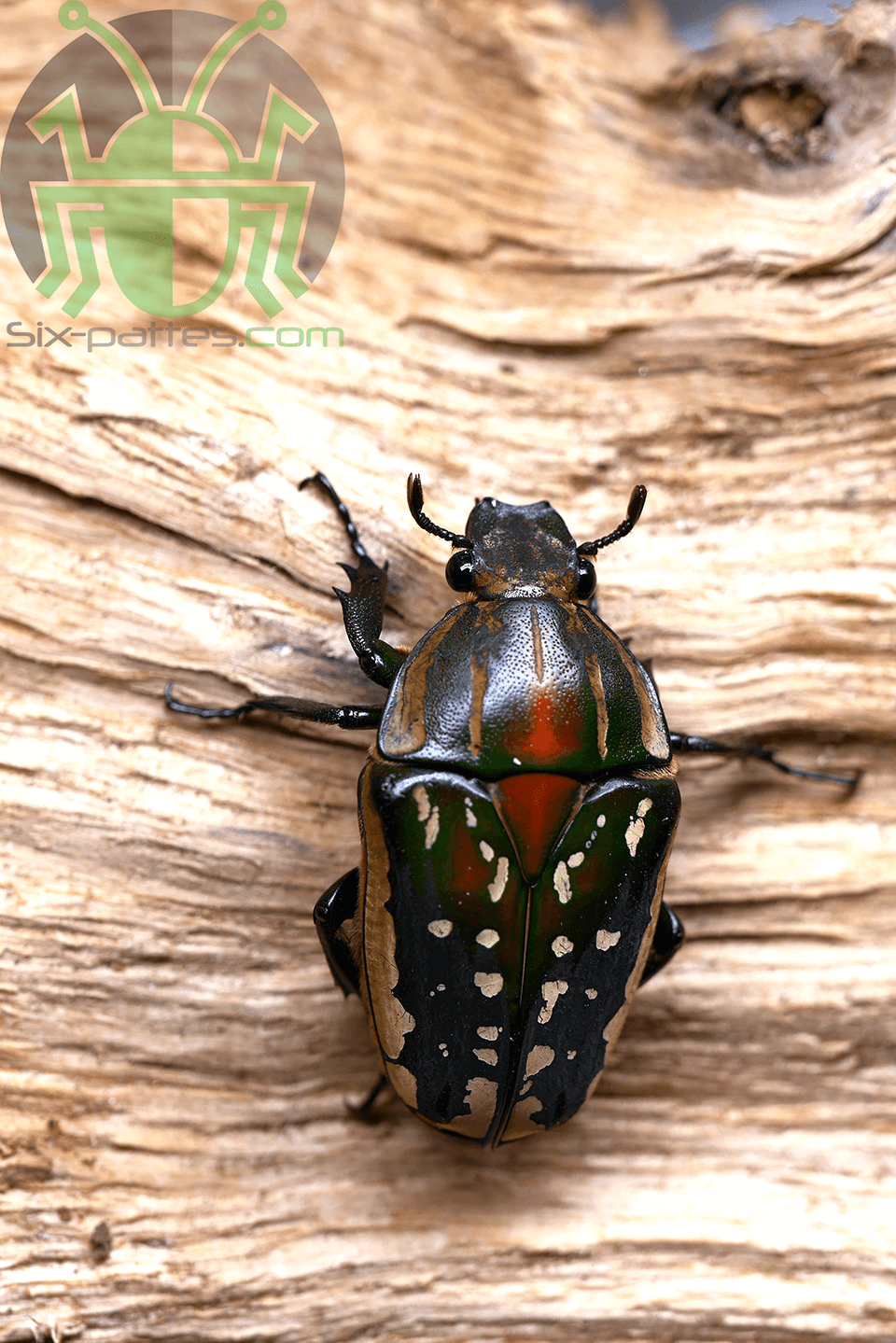
The predominant color of this beetle is green, sometimes with a brown discoloration or orange/rust-colored highlights. The elytra have numerous cream or yellow spots. The pronotum is green with two cream or yellow stripes. The wings are relatively long and amber in color.
The male has a horn, is larger than the female and has a light down on the elytra. The female, smaller, has brighter elytra and has no horn.
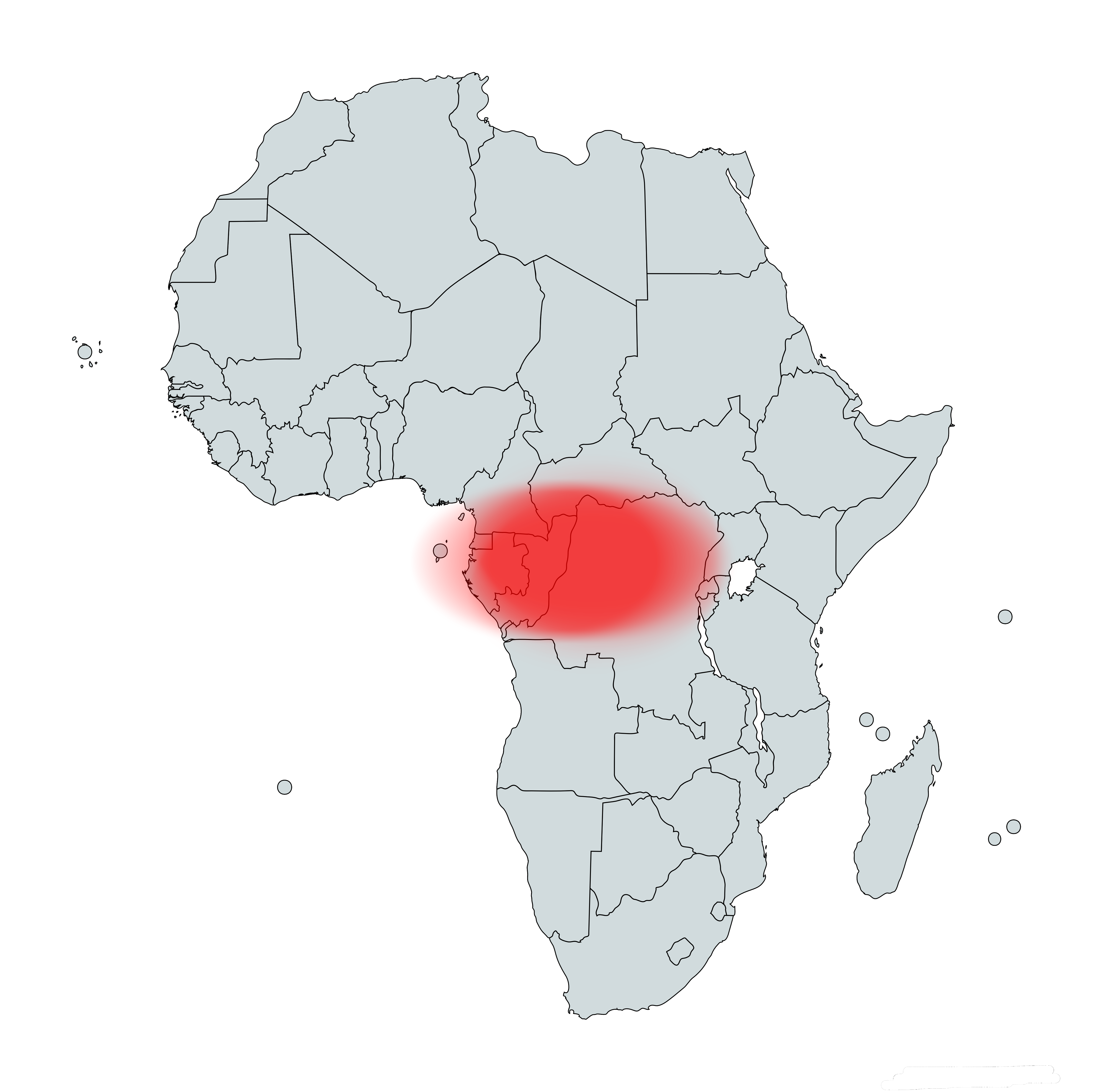
This species is native to the tropical forests of Central Africa (Zaire, Central African Republic, Ivory Coast, Gabon, Uganda, Ghana).
Former names: Chelorrhina bilineata Kraatz, 1890; Chelorrhina polyphemus confluens Kraatz, 1890
Special features:
Easy to breed - Suitable for breeders who already have a little experience in breeding beetles and would like to breed larger sized cetonia beetles.
Some points to note
- Diurnal species: needs space with branches to move around.
- It is better to leave only one male for 2 or 3 females.
- Risk of cannibalism between larvae if they lack food and are raised in too low a volume of substrate


What you might need:
01. Breeding
For larvae : Plastic boxes with ventilation. Provide a quantity of substrate adapted to the number of larvae.
It is advisable to raise the larvae individually (especially at stages L1 and L2, stage L3 being less risky) in boxes of at least 1 to 2 L. Otherwise, to raise them together, it is necessary to provide a fairly large tank, with a larger volume per larva.
For the hulls : It is possible to leave the shell in the breeding box of the larval stage. Otherwise it can be transferred to another box. In all cases, the container must be properly ventilated.
For adults: Provide a terrarium adapted to the number of individuals. For 1 couple, provide for example a terrarium of 50x40x50 (LxWxH) with ventilation on the lid. It is important to provide at least 20cm of substrate for laying eggs. ( If the substrate is not high enough, the females will lay few or no eggs). Also provide small branches for moving around.

The ground should not be completely flat because the beetles that fall on their backs die quickly because they can no longer turn around. It is therefore very important to fill it with bark, stones or other materials and not to flatten the substrate.
Temperature: for optimal conditions 25/28°C but breeding possible between 20°C and 28°C.
Humidity:
For larvae: provide a slightly damp substrate.
During pupation: provide a slightly drier substrate.
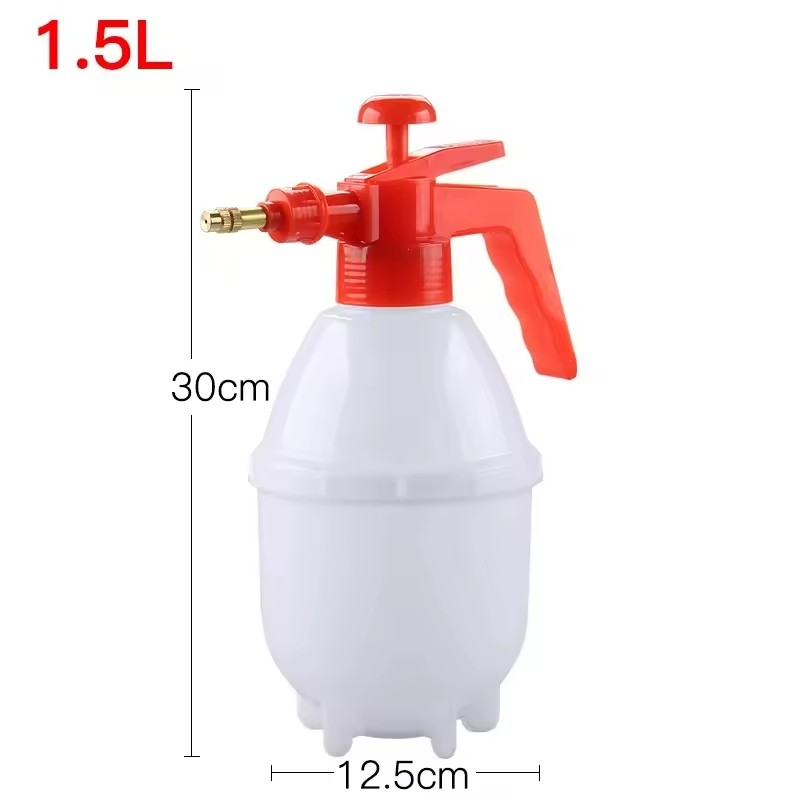
For adults: This is a beetle that prefers higher humidity (around 70/80%). Provide a slightly damp substrate. If the terrarium is well ventilated, provide a small spray of water every 2 to 3 days.
Lighting: Lighting is necessary for adults (bulb, spotlight, tube, etc.). The latter must provide a little warmth.
For larvae: Classic flower beetle substrate: decomposed and crushed oak, beech or possibly chestnut leaves. The larvae are saproxylophagous and feed on decomposing materials (wood, leaves). If the larvae lack food, there is a risk of dying them or obtaining small specimens. The substrate will need to be renewed as soon as there is too much excrement. It is possible to add protein supplements to obtain larger imagos, even if with a classic substrate you can already obtain good results.
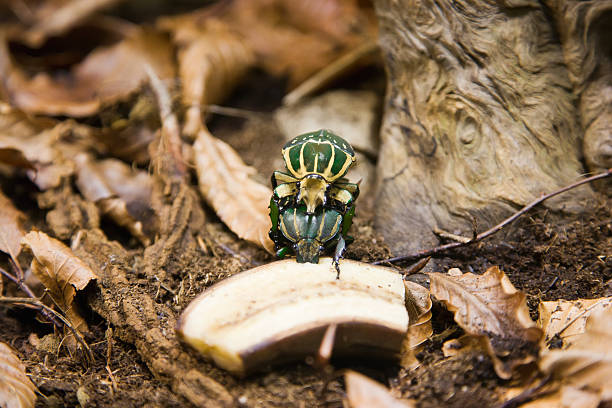
For adults: Fruits (mainly banana) or beetle jelly. Possible supplement with pollen. To be renewed as often as possible as soon as the food begins to deteriorate.
Incubation
2 to 5 weeks
Development
From 6 to 9 months
Nymphosis
1 1/2 to 2 months
Imago lifespan
3 to 5 months
02. Please note
Sexing: The male has a horn. The female does not. At the larval stage it is possible to know the sex of the larvae (at the L3 stage). This can be useful to take stock of the number of males/females in your breeding. The larger the larva, the easier the identification will be. To do this, simply look at the ventral side of the last abdominal segment. The male has a black point a little larger than the hairs. This is the Herold's organ , a chitinous point, visible by transparency on the L3 larvae. Females do not have it.
Prolificacy: Average if conditions are optimal. It is possible to reach 30 to 40 eggs per female.
Cannibalism: Yes at the L1/L2 larval stage if the volumes of the breeding containers are too low and if there is a lack of food.
When checking the condition of the substrate, it is best to remove eggs and small larvae and sort them into separate boxes. This will prevent young larvae and imago from eating the eggs.