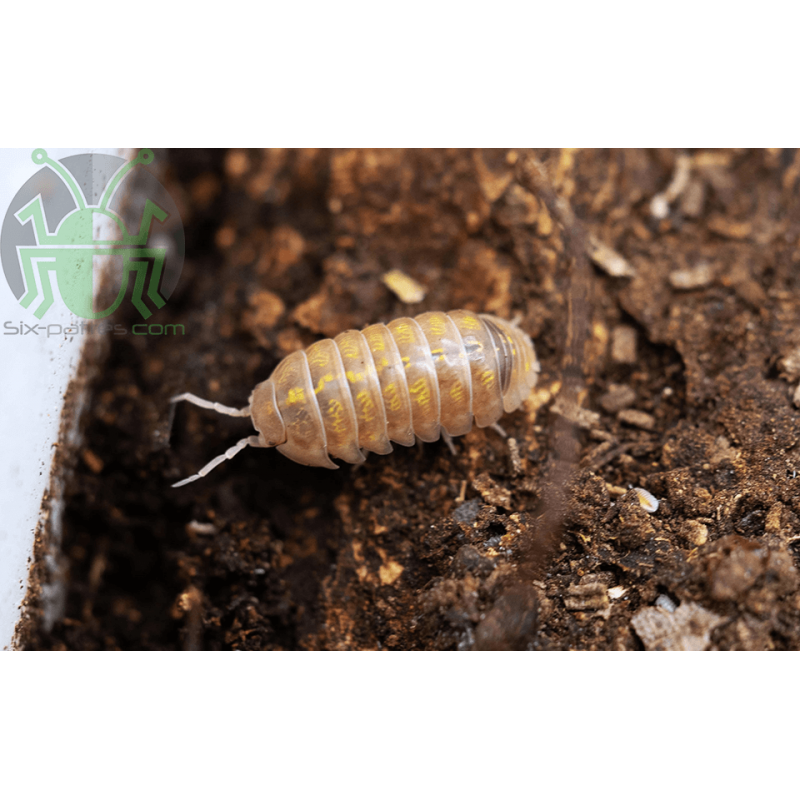
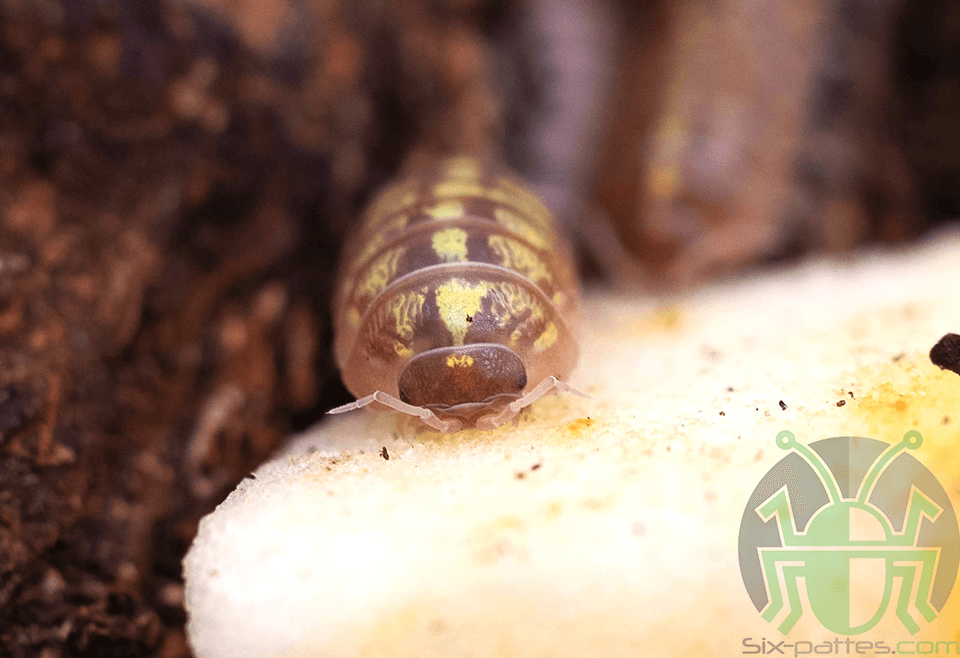
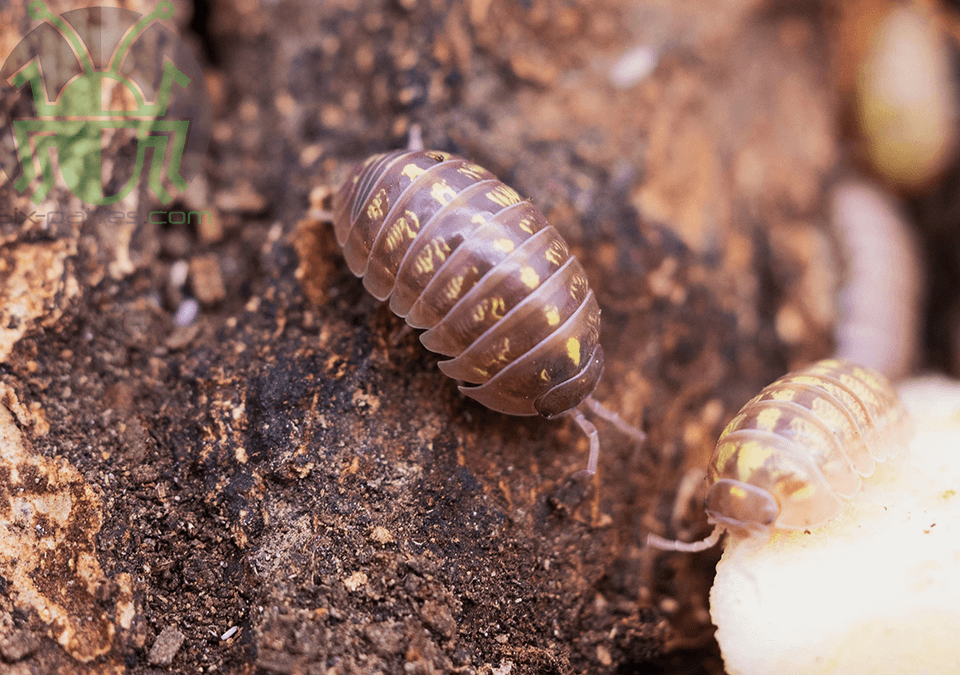
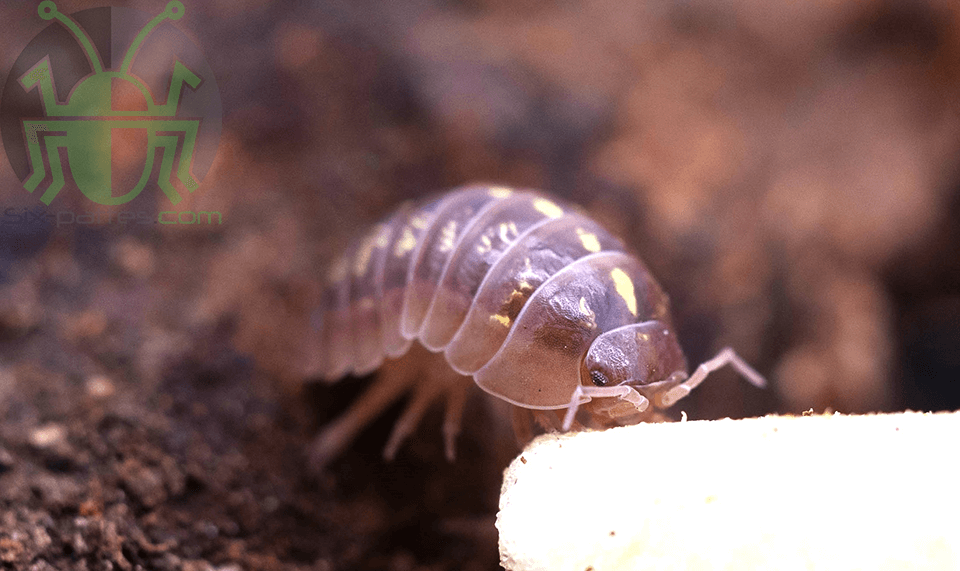
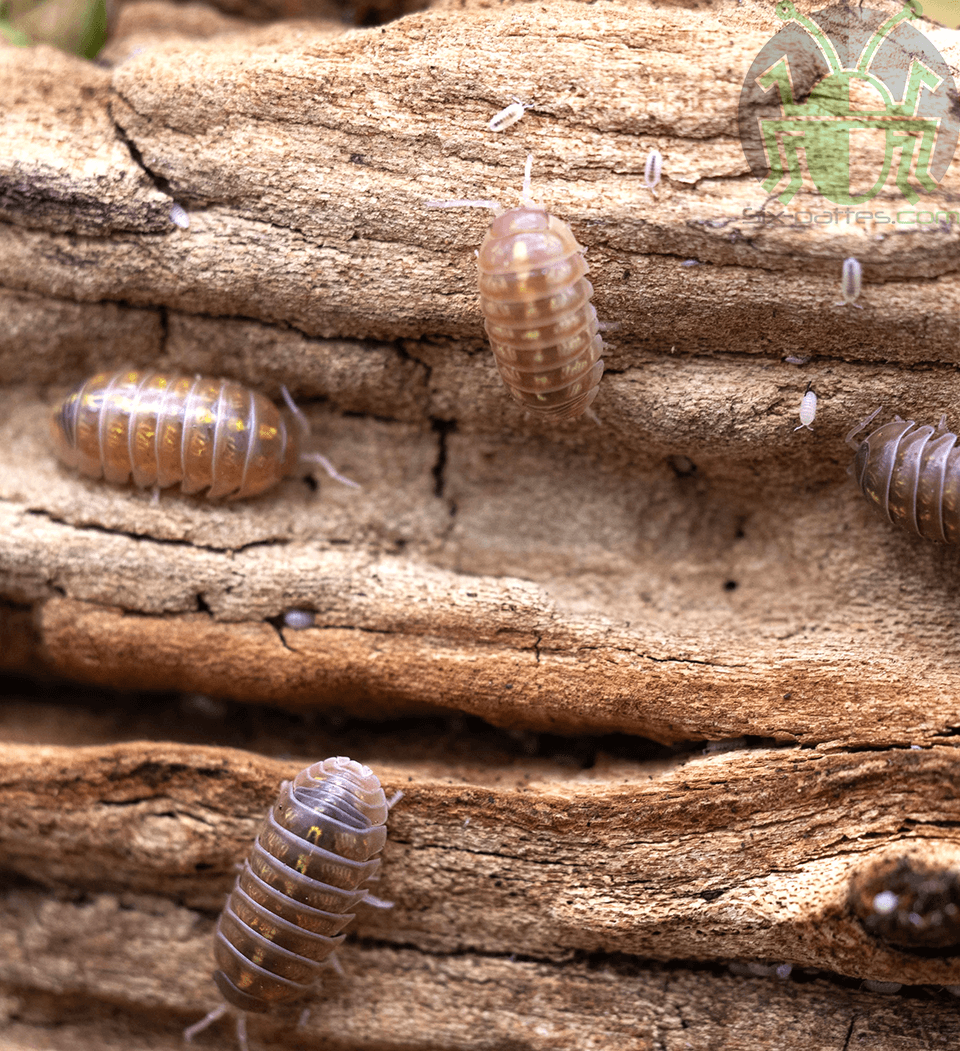
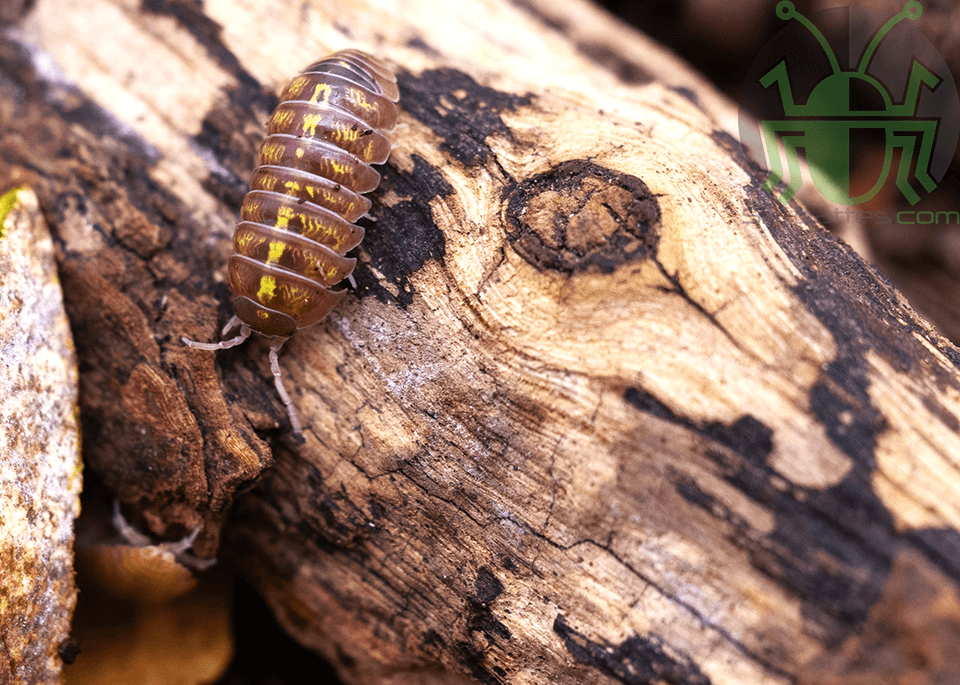
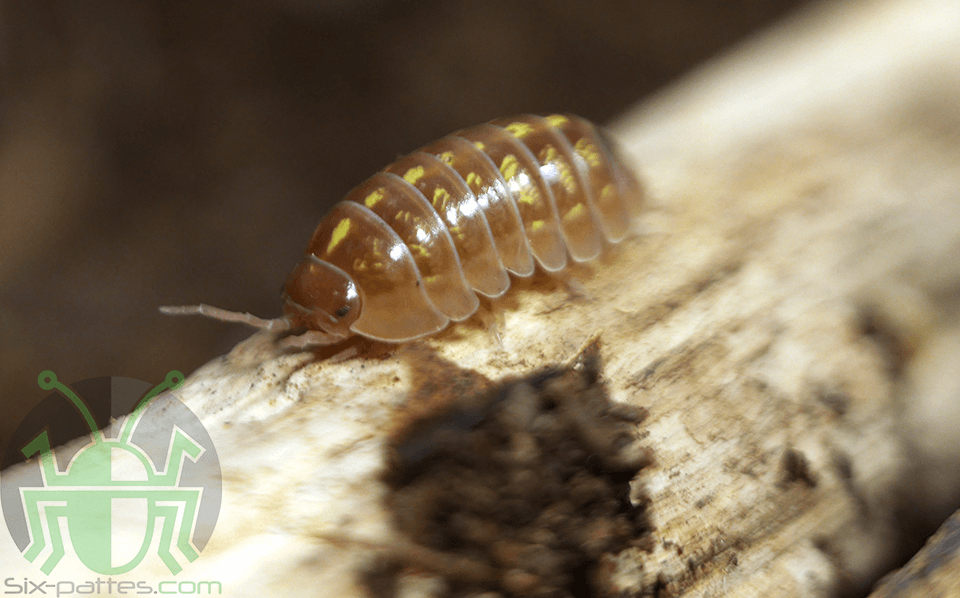
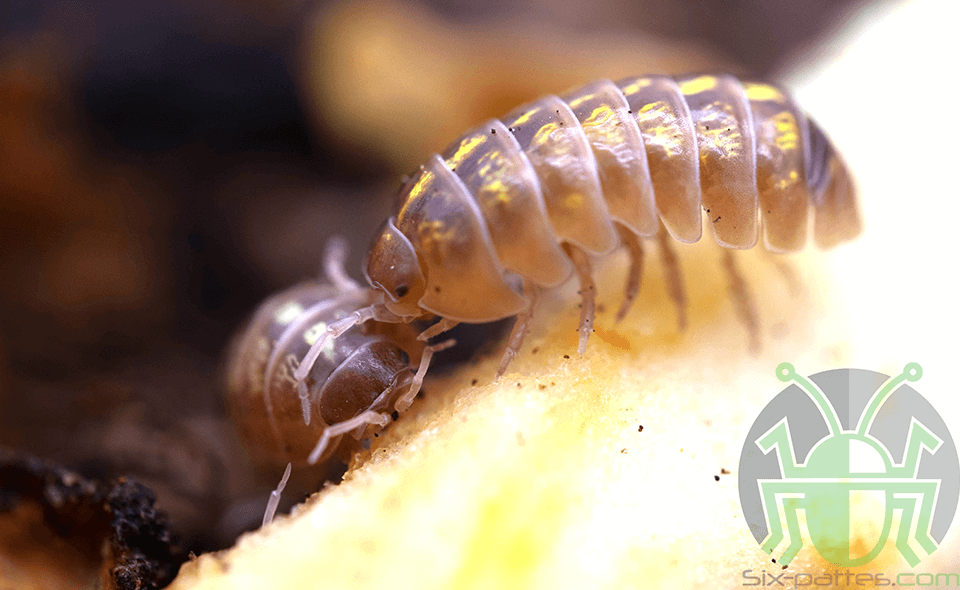
They have quite variable shades: beige-brown, slightly orange with yellow spots.
This is the T+ albino form (tyrosinase) which is a mutation of the classic gray Armadillidium vulgare. There is also the T- albino form where the specimens are much whiter.
ORIGIN
Cosmopolitan species
Very easy
DIFFICULTY
Very easy to breed species
Development
Quite fast about 7 months - Quite prolific species
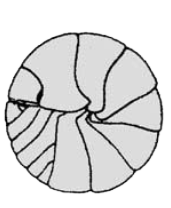
To protect themselves from attackers, Armadillidium vulgare "T+ albino" use two techniques. The first and most used is flight! They are quite fast. The second is volvation , that is to say, rolling into a ball to protect themselves! Many animals such as snakes, hedgehogs or even millipedes use this technique. This species also has repugnant glands that release unpleasant secretions in order to scare away its attackers.
REPRODUCTION and laying
The reproduction ofArmadillidium vulgare "T+ albino" is very simple.
Mating lasts a few seconds. Once mated, the female will keep the male's sperm and will be able to mate with other males. (Reproduction by polygynandry) This sperm can then be used in the following broods.be used in the following broodsbe used in the following broodsIt is therefore difficult to identify the breeding male.
The incubation of the eggs takes place directly in the abdomen of the female in a pouch called a marsupial pouch or marsupium and lasts about 2 to 3 months. The young (called mancas) are born and remain in the marsupium for three to four days, then emerge. At birth they are white and measure about 1mm.
TEMPERATURE HYGROMETRY
Temperature
Possible breeding between 22 and 28°C .
Hygrometry
60-75%. As with most isopods, it is advisable to separate the terrarium into 2 zones, a humid zone and a dry zone.
If the terrarium is very airy and the substrate dries out too quickly, you can spray a little water.
Terrarium
Terrarium
Many possibilities to raise them. We can use braplast boxes or other plastic boxes with ventilation but also aquariums or terrariums. The size will depend on the number of individuals and will therefore have to be adapted to the growth of the colony. For example, in a 5L box we can keep about 20 individuals. Then in a 10L about 30/40 individuals.
It is possible to create bioactive environments by raising Armadillidium vulgare "T+ albino"with other animals.
Substrate
The substrate is a mixture of decomposed oak, beech or chestnut leaves and decomposed wood. This is the litter layer of deciduous forests. The whole will be crushed as finely as possible and then placed at the bottom of the terrarium. An area with whole or coarsely crushed leaves can also be placed.
Decorations and additional elements
Bark will be placed on the substrate to create hiding places. The isopods will gather at this level. We can also add some stones, moss and even natural plants .
Food
Food
They are detritivores and they feed on decomposing organic matter. The basic food will therefore be the substrate . Then we can add pieces of vegetables and fruit . Preferably vegetables and fruits that keep over time and do not go moldy too quickly: zucchini, cucumber, squash, apple, banana, ... It will therefore be necessary to adapt the quantity of food according to the size of your colony.
Supplements
A protein source : dehydrated shrimp are very popular, as is our special isopod mix.
A calcium intake : Cuttlefish bone or calcium powder.