By continuing to browse this site, you accept the use of cookies to maintain your connection to the site and to compile visit statistics.
Epidares
Nolimetangere
( De Haan , 1842 ) PSG No. 99
Kingdom: Animalia
Phylum: Arthropoda
Class: Insecta
Order: Phasmatodea
Family: Heteropterygidae
Subfamily: Dataminae
Genre: Epidares
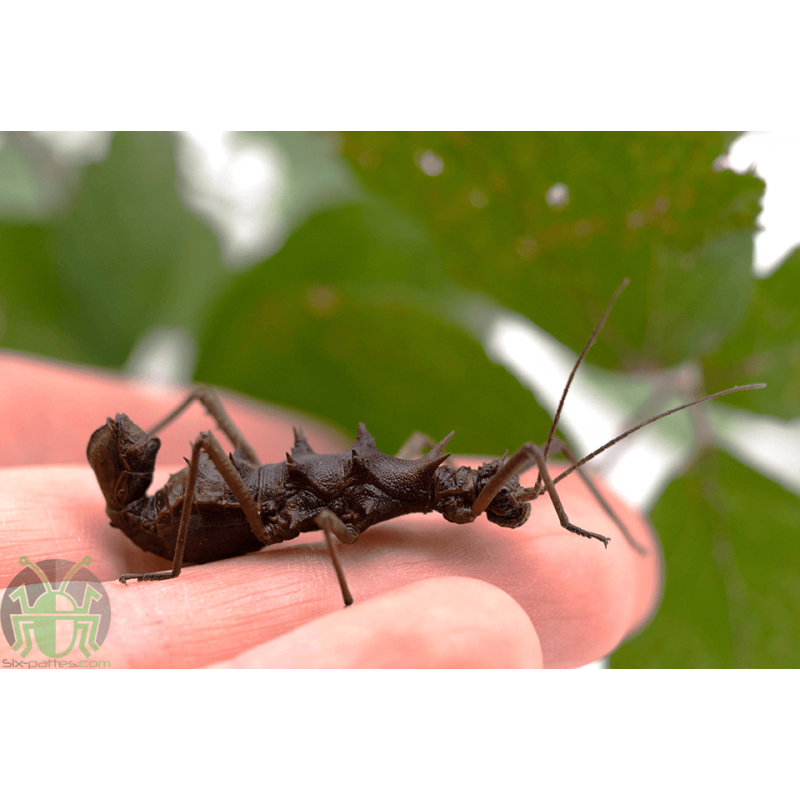
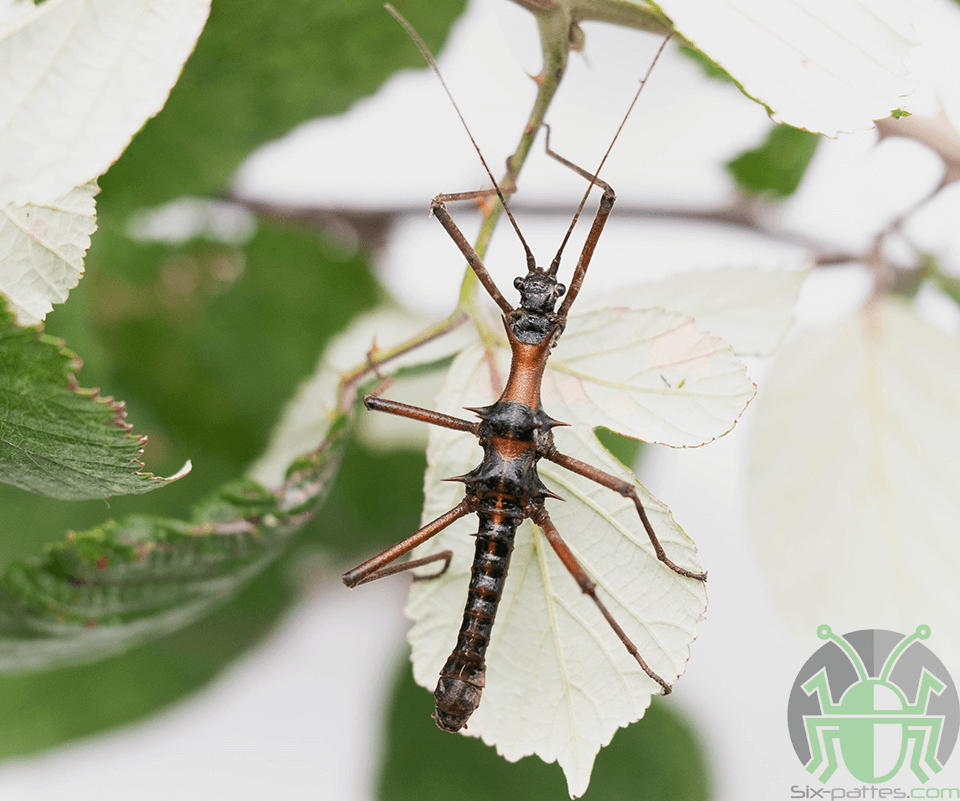
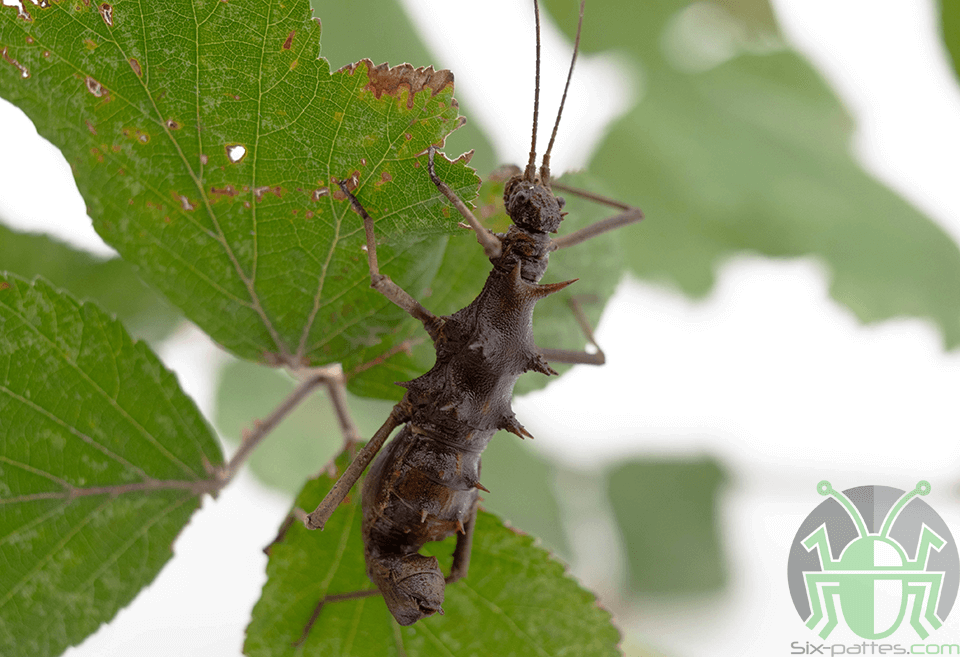
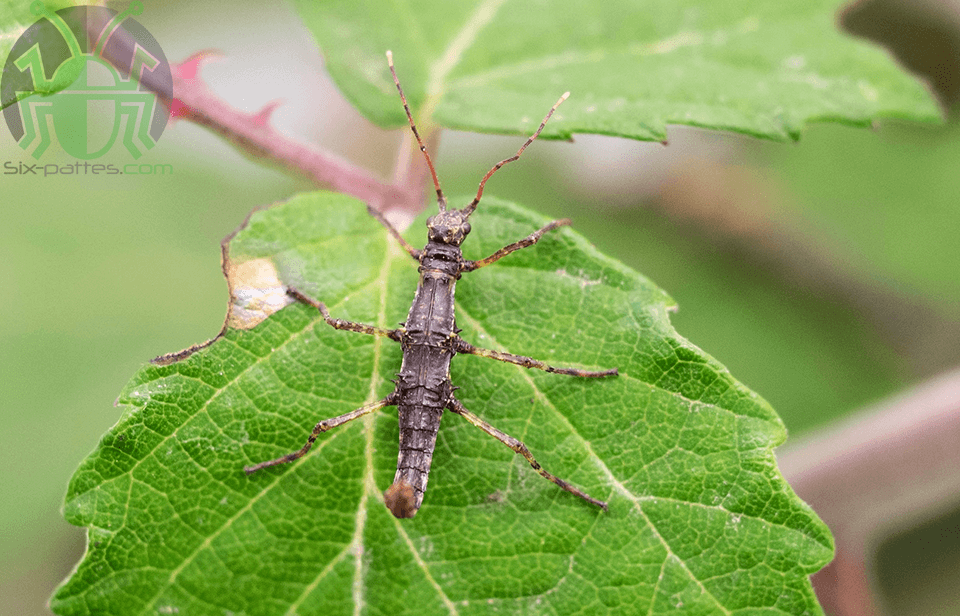
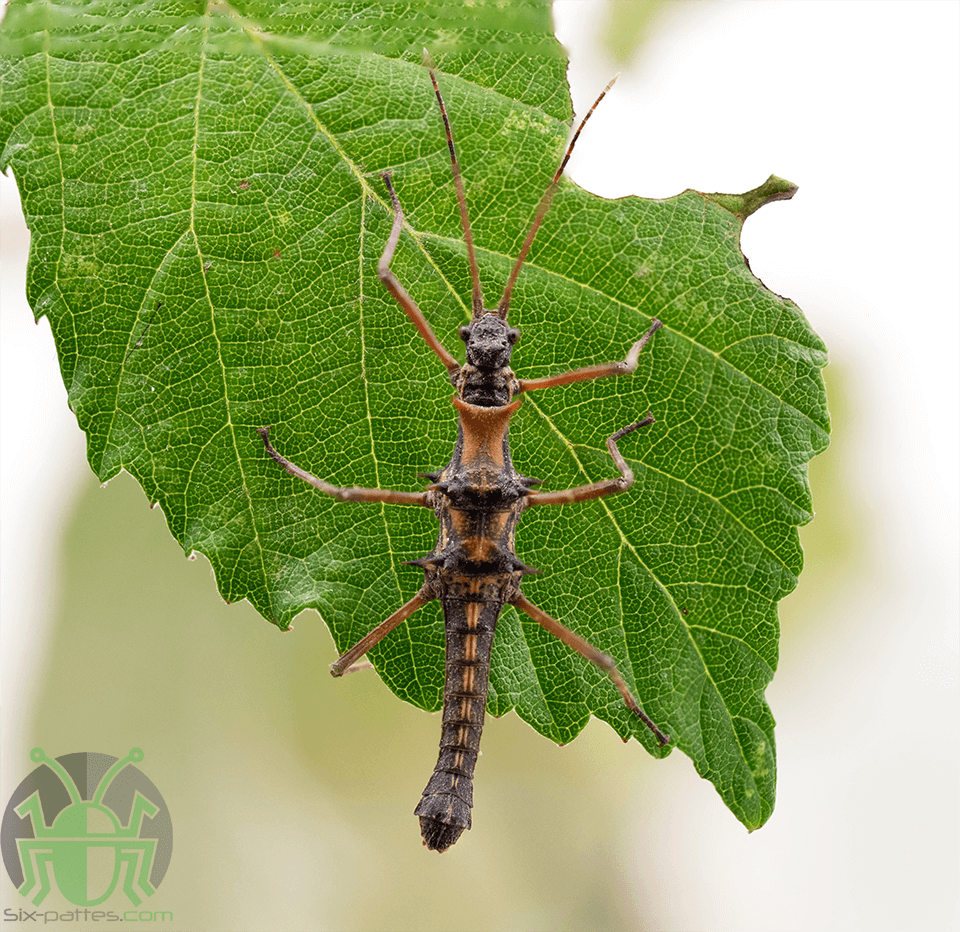
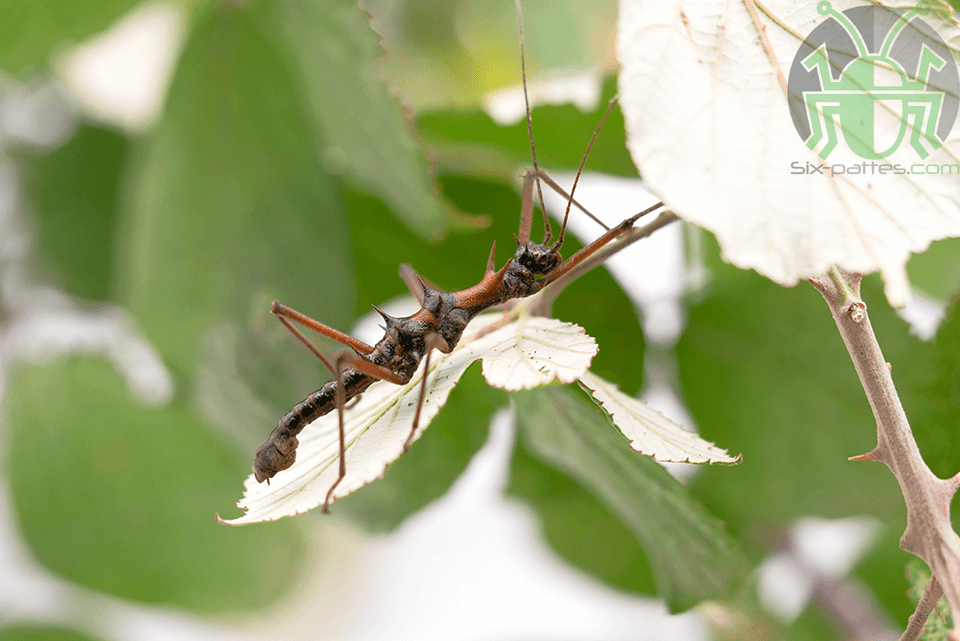
Epidares nolimetangere is a small species native to the state of Sarawak (Borneo Island) in East Malaysia.
Simple breeding species.
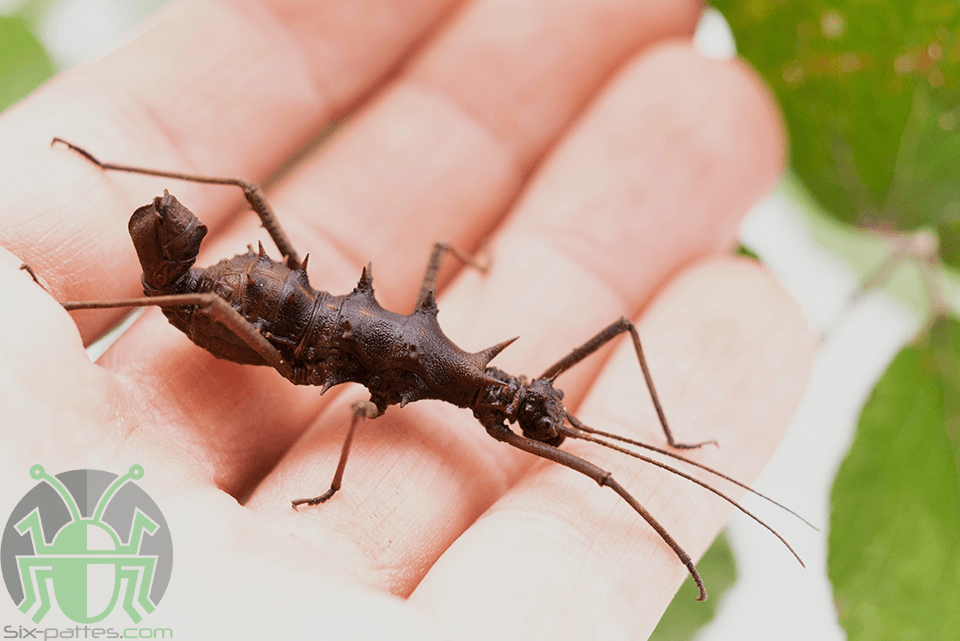
In case of danger, they play dead for several minutes! This is what is called thanatosis or mock death.
The species name nolimetangere (originally: noli-me-tangere) comes from Latin and means "don't touch me"


For the eggs:
Provide an incubation box. We recommend our micro-perforated boxes with lids. Then several possibilities:
For young people:
Either you raise them with the adults (be careful when changing food, the young are small and fragile) or you raise them separately. You will therefore have to use the same model of terrarium as the adults but of a smaller size.
The floor of the terrarium will be covered with damp paper towels to maintain good humidity and make it easier to maintain the terrarium.
For adults:
Minimum (recommended) height of the terrarium: 2.5 times the size of the adult female.
The size of the terrarium will depend on the number of specimens. For example, in a 30x30x30 terrarium, you can keep 5/6 couples.
In addition, the terrarium must be very poorly ventilated . You will therefore need a terrarium with little ventilation.
The floor of the terrarium will be covered with damp paper towels to maintain good humidity and make it easier to maintain the terrarium.
We can add bark, tiles and other decorations because this species tends to hide.
Epidares nolimetangere feeds mainly on brambles but they can also be fed with rose, raspberry, hazel, oak, beech, chestnut, hawthorn or even St. John's wort.
To do this, you need to arrange the branches in the terrarium by placing the stems in a jar of water (to avoid drowning, be sure to block the entrance to the jar with paper towels, for example).
Renew as soon as the food begins to fade.
Temperature: between 20°C and 28°C.
Humidity:
For the eggs: The incubation medium and the atmosphere must remain moist. To do this, spray a little water whenever necessary. Be careful if it is too dry, either there will be no births, or the young may not be able to come out of the egg completely or will be poorly formed.
For young: Humid atmosphere required, approximately 70/90% humidity. Be careful if it is too dry, the moults will be missed. Humidity can be provided by the food plant thanks to the foliage. Otherwise, you must spray a little water as soon as necessary.
For adults: Humid atmosphere required, approximately 70/80% humidity. Humidity can be provided by the nourishing plant through the foliage. Otherwise, spray a little water as needed.
Lighting : Lighting is optional if the ambient light is sufficient. Otherwise, additional lighting will be required.
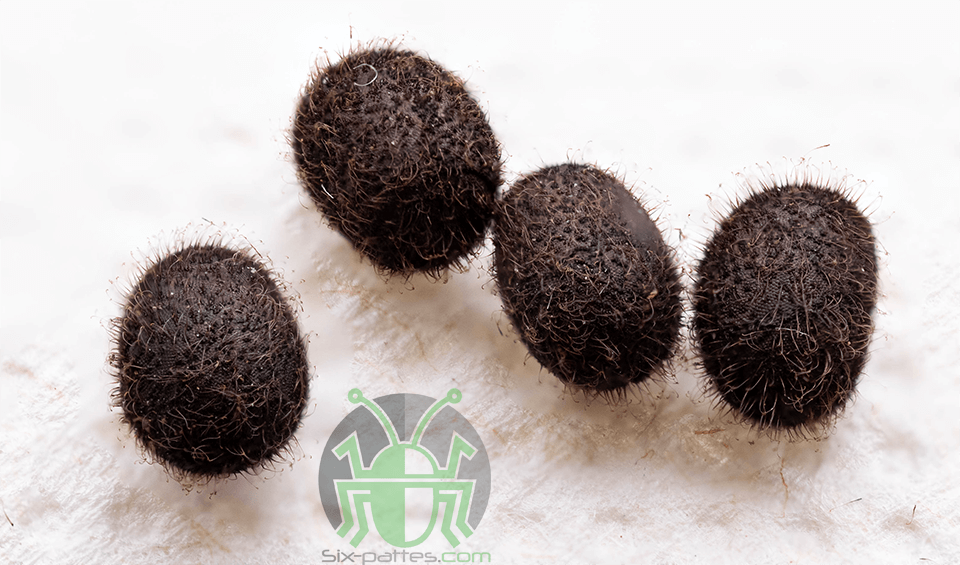
Laying method: The female Epidares nolimetangere drops her eggs on the ground, they are often grouped in the most humid areas. The eggs being hairy they tend to adhere easily to each other.
Laying frequency: Females begin laying about 1 month after the imaginal moult. A female lays little, about 3 eggs per week.
Egg collection: As soon as possible or each time the terrarium is cleaned and the bottom paper towel is changed.
Incubation time: 3 to 5 months. This will depend on the incubation temperature, the higher it is, the shorter the duration will be. Care must be taken to maintain good humidity and to ensure that there is no development of mold.
Development time : About 5 months but can be up to 12 months depending on temperature. Males will mature more quickly than females.
Means of defense: None
Reproduction: sexual.
Defense: None
Activity : Nocturnal stick insect. During the day it hides in the branches. At night it moves, feeds and the females lay eggs.
Prolificacy: Low

|
D philippe
Mar 15, 2024 5
(5/5)
|
Epidares nolimetangere
Un grand soin pour l'emballage avec isolation, jeunes bien vivants et magnifiques, oeufs parfaits.
Avec un petit cadeau en prime. grand merci |