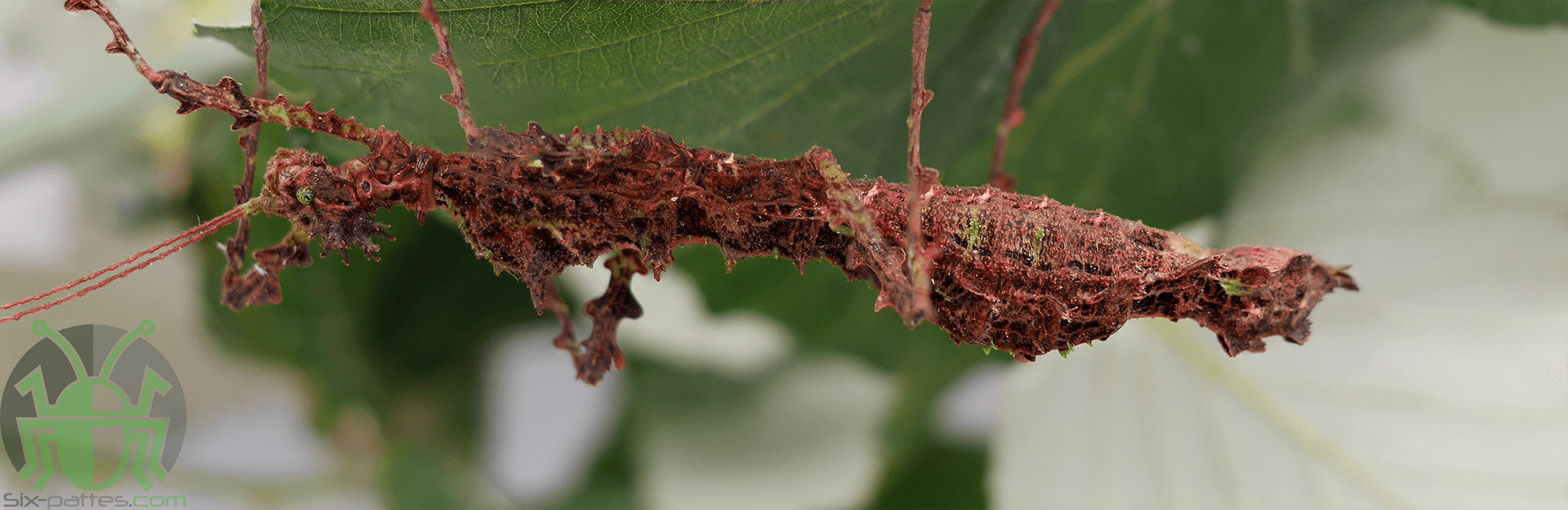
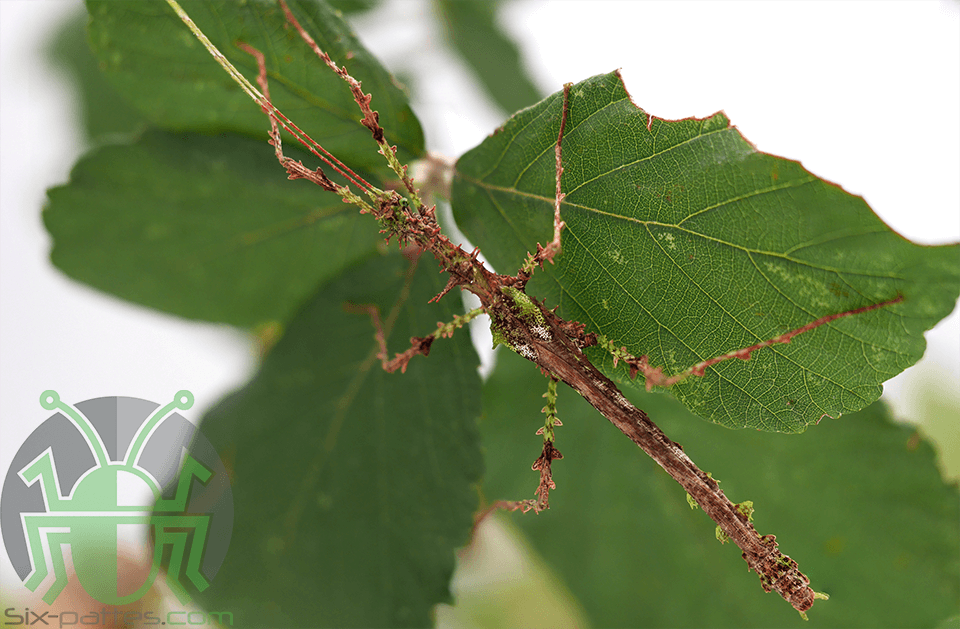
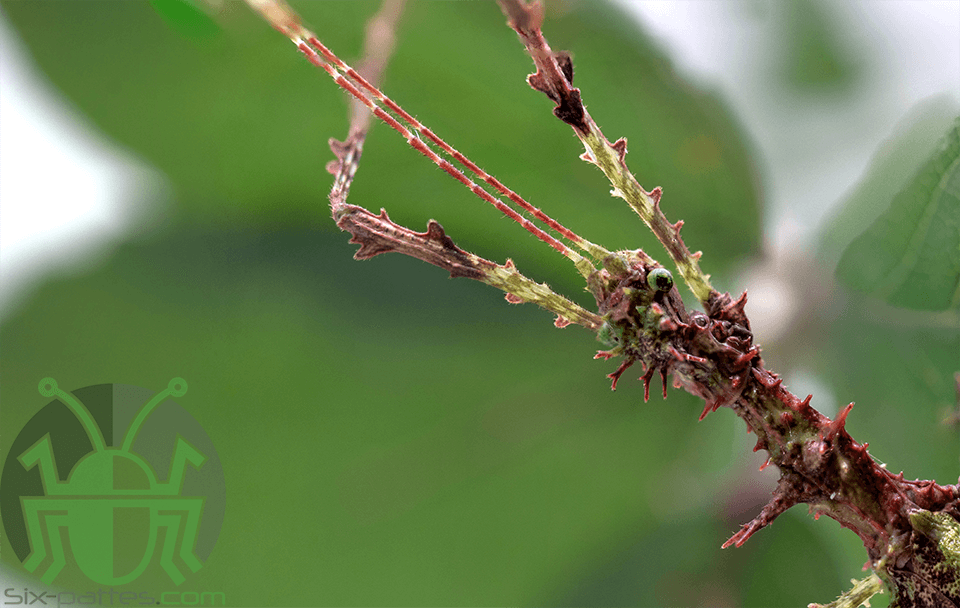
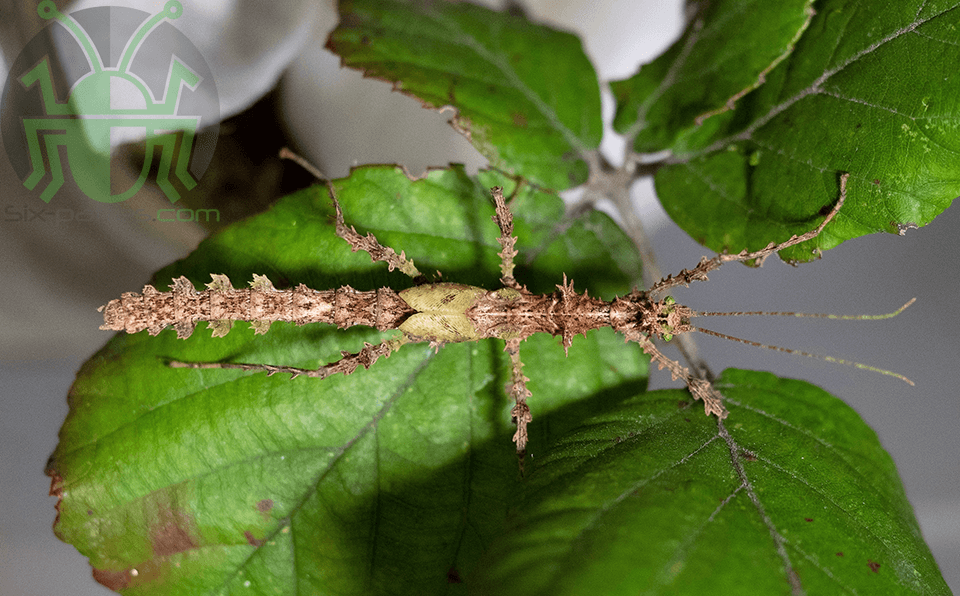
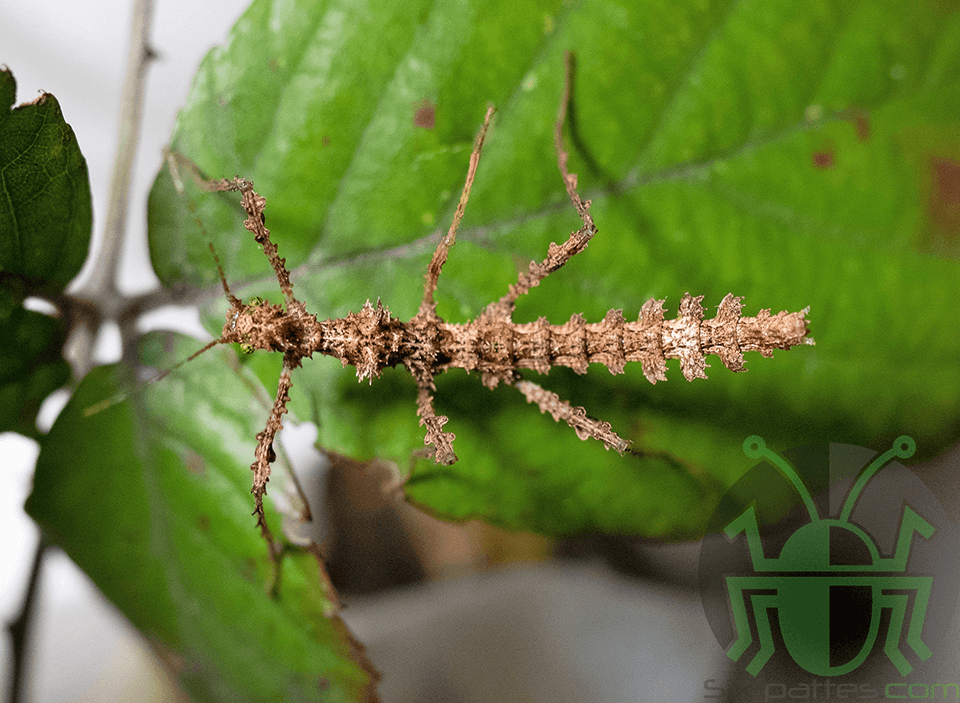
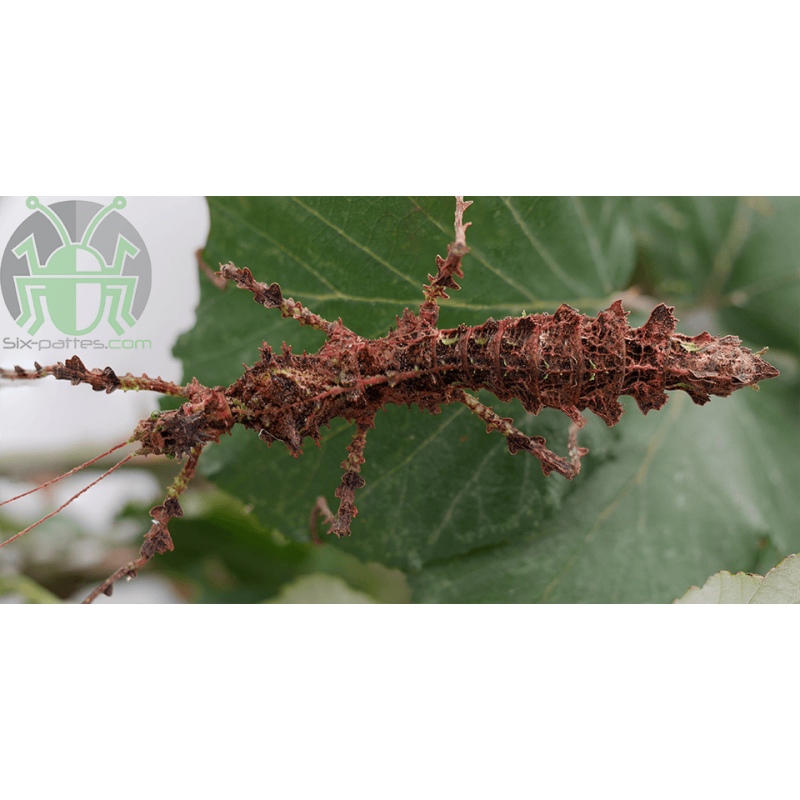
This beautiful new species is named after Samara, the daughter of Juerg Sommerhalder (Switzerland), who found the holotype and several paratypes in March 2018 in Costa Rica. Indeed, Taraxippus samarae "Siquirres" is native to Costa Rica (Limón Province: Siquirres and Pocoá) and Panama (Coclé Province, Omar Torrijos National Park).
THEMalesmeasure about 5cm and are more or less intense brown in color with more or less light areas. They haveprominent antler-shaped projections on the head, spines on the thorax and leaf-like teeth on the legs. Males have wings but do not fly.
Femalesmeasure about 5 to 7 cm. They are therefore a little larger but also more massive than males and do not have wings. They are also more or less intensely brown in color. They are covered with multi-spiny growths on the body and foliaceous projectionson the legs.
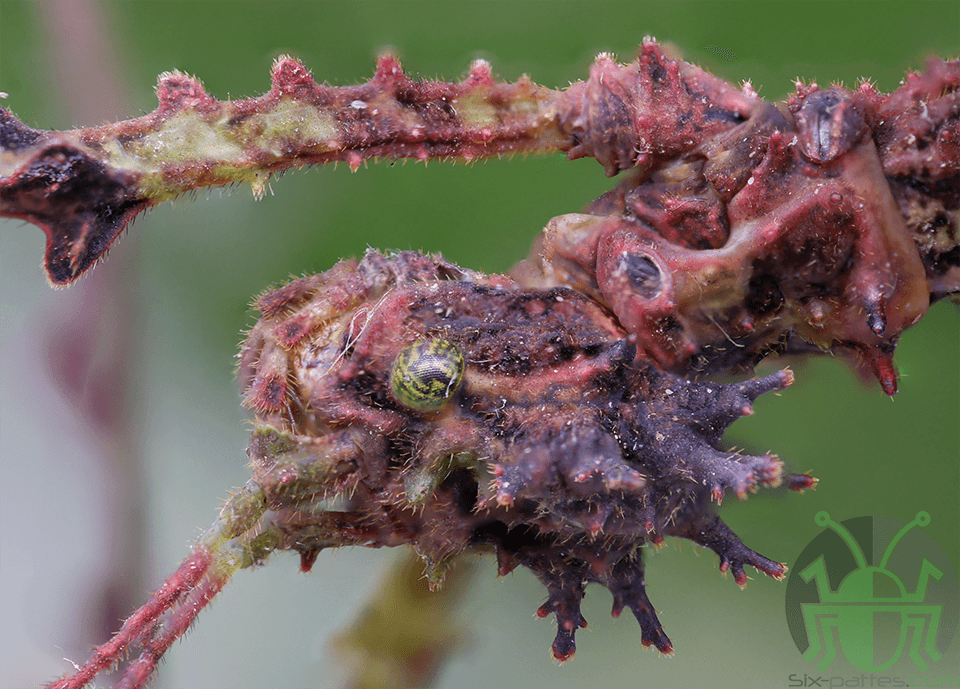
The young ones are very thin and fragile. They already have growths on their bodies.
The eggs are about 3 to 4 mm long and 1 to 2 mm wide. They are dark brown and havelong, thin, partially branched and connected "fringes" around the entire periphery of the egg. The other surfaces have hairiness.
A camouflage pro
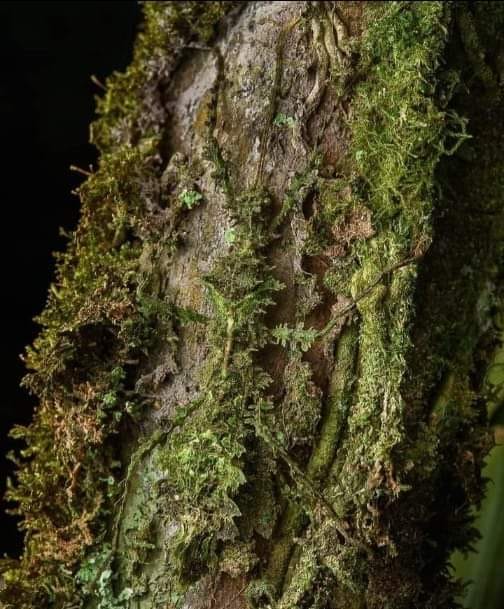
This species is particularly gifted in mimicry. It blends in perfectly with moss!
Place some paper towel at the bottom of the box, moisten it and place the eggs on top. Be careful of the risk of mold.
You place a slice of floral foam at the bottom of the box, moisten it and place the eggs on top.
You place vermiculite at the bottom of the box which you moisten and place the eggs on top.
For young people:
Either you raise them with the adults (be careful when changing food, the young are small and fragile) or you raise them separately. You will therefore have to use the same model of terrarium as the adults but of a smaller size.
The floor of the terrarium will be covered with damp paper towels to maintain good humidity and make it easier to maintain the terrarium.
For adults:
Minimum (recommended) height of the terrarium: 2.5 times the size of the adult female.
The size of the terrarium will depend on the number of specimens. For example, for 3 couples, plan for a terrarium of 30cm x 30cm x 45cm for example. It is important to have sufficient height for moulting.
In addition, the terrarium must be partially ventilated . For example, with only one side made of mesh and the others made of glass. This will help maintain sufficient humidity.
The floor of the terrarium will be covered with damp paper towels to maintain good humidity and make it easier to maintain the terrarium.
Mainly bramble. But it is also possible to use fern.
To do this, you need to arrange the branches in the terrarium by placing the stems in a jar of water (to avoid drowning, be sure to block the entrance to the jar with paper towels, for example).
Be careful, it is better to avoid changing food plants during their development.
For the eggs:The incubation medium and the atmosphere must remain humid. To do this, spray a little water whenever necessary. Be careful if it is too dry, either there will be no birth, or the young may not be able to fully emerge from the egg or will be poorly formed.
For young: Humid atmosphere required, approximately 70/90% humidity. Be careful if it is too dry, the moults will be missed. Humidity can be provided by the food plant thanks to the foliage. Otherwise, you must spray a little water as soon as necessary.
For adults:Humid atmosphere required, about 70/80% humidity. They can tolerate slightly lower humidity. Humidity can be provided by the food plant through the foliage. Otherwise, spray a little water as needed.
Lighting:Lighting is optional if the ambient light is sufficient. Otherwise, additional lighting will be required.
02. Its development
The eggs
Laying method: The female drops her eggs directly onto the ground.
Frequency of laying: Not known at this time. Laying appears to occur in periods. The female's abdomen enlarges before the laying cycles.
Egg collection: As soon as possible or each time the terrarium is cleaned and the bottom paper towel is changed. It's very simple, you just have to collect the eggs on the ground.
Incubation time: About 6 months. Care must be taken to maintain good humidity. This species seems less sensitive to mold development.
The young people
Developmenttime: Not known at this time - Development seems to be quite long.




.png)