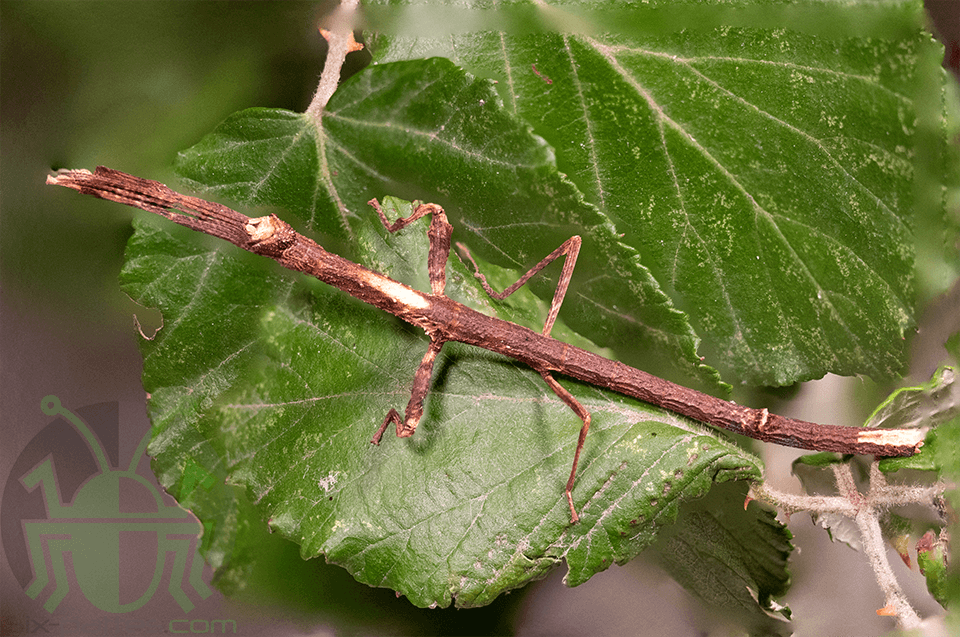
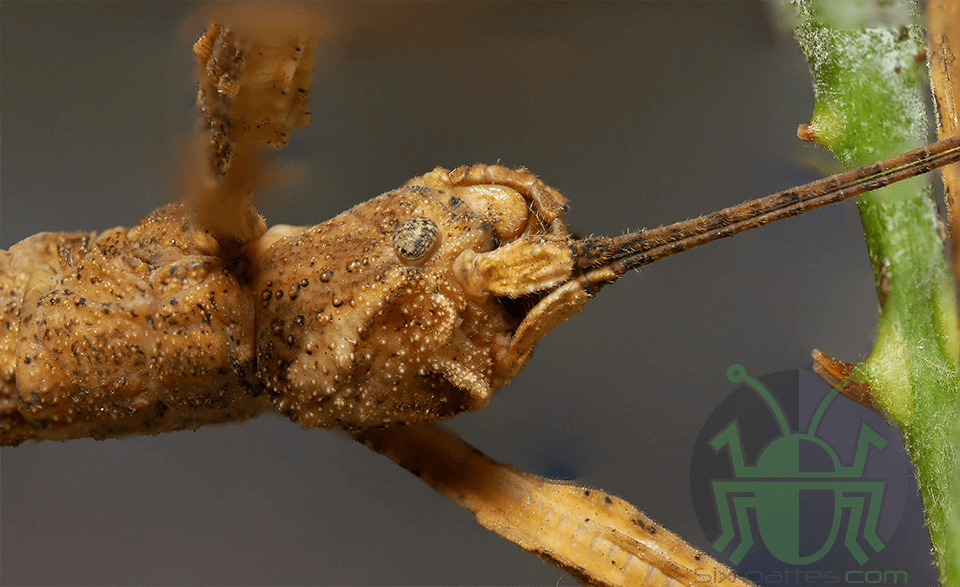
Very beautiful species of stick insect native to Southeast Asia and in particular theMalaysian archipelago: Borneo and Surawak.
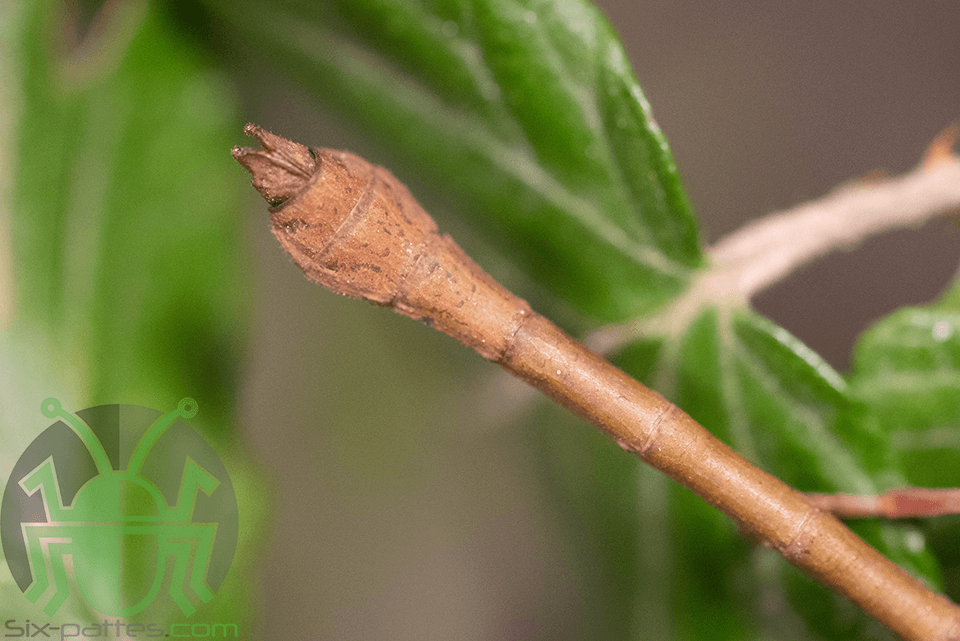
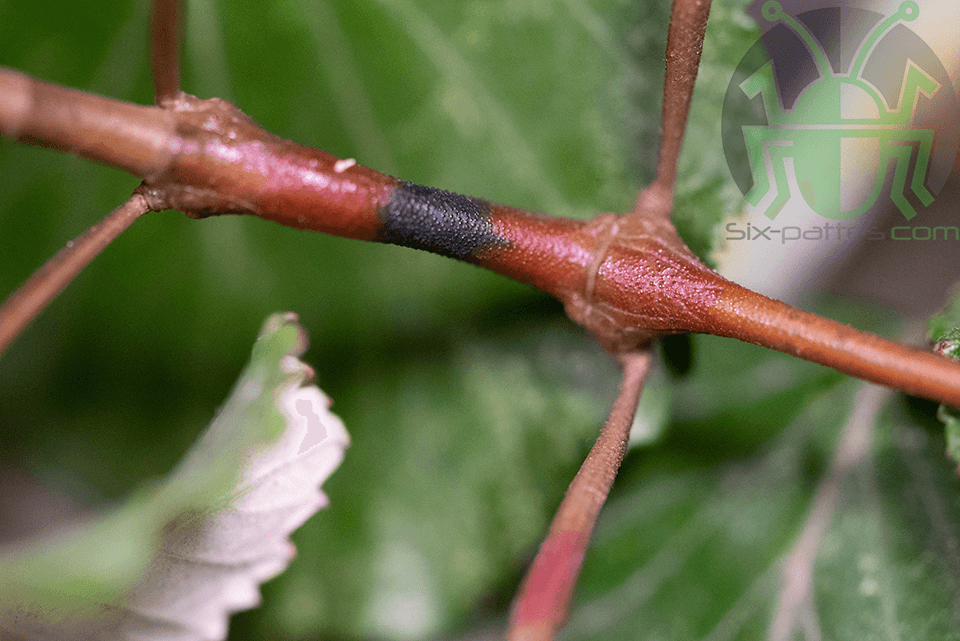
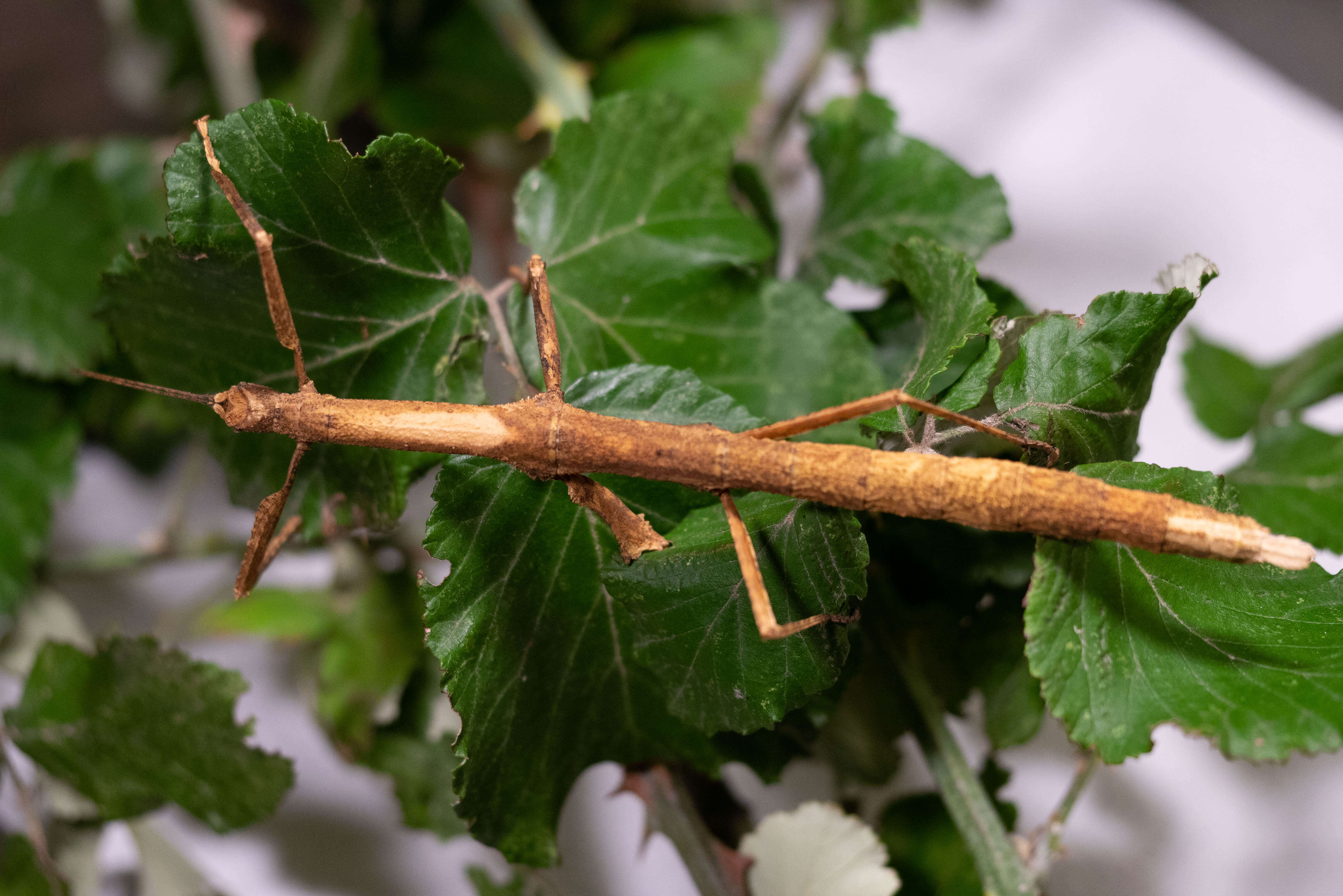
Adult malesare about 9 cm long. They are smaller and thinner than females and look very much like a twig. They are brown/reddish in color. They also have the particularity of having a curved abdomen with a dark green band at this point.
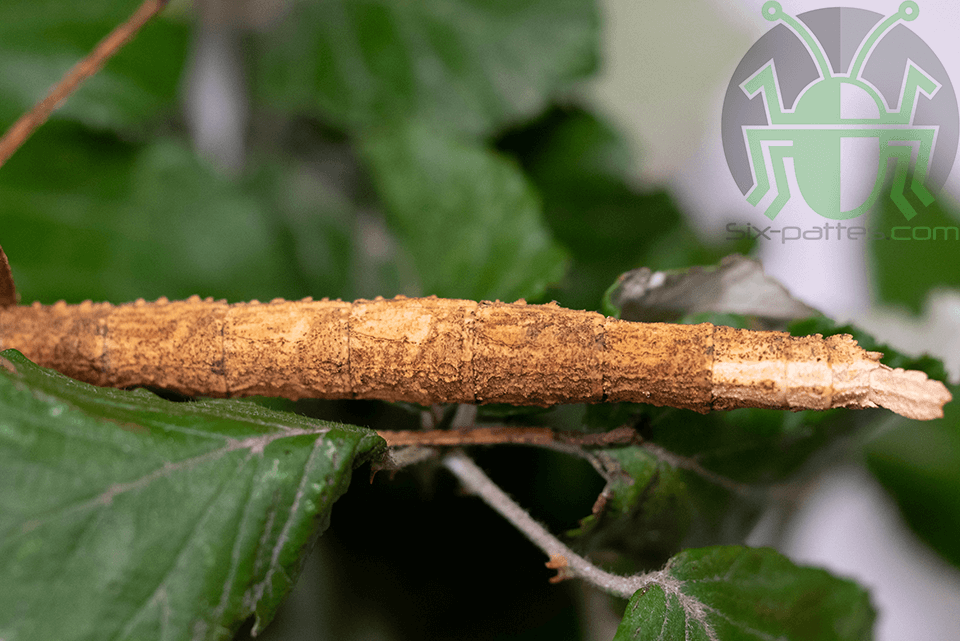
Adult females are about 12 cm long and do not resemble males. They are thicker and mimic the imperfections of the bark of branches. The colors are quite variable. From orange-brown to dark brown. The beige spots are random.
The young are a few centimeters long at birth and are dark brown in color.
Adult female
Special features:
Very easy to breed and particularly suitable for beginners
Active at night
Their mimicry is formidable, be careful when replacing food not to leave individuals in the branches.
When they feel threatened, they align their legs in the direction of their body and stand still. They look like a small piece of wood.
For the eggs:The incubation medium and the atmosphere must remain humid. To do this, spray a little water whenever necessary. Be careful if it is too dry, either there will be no birth, or the young may not be able to fully emerge from the egg or will be poorly formed.
For young: Humid atmosphere required, approximately 70/80% humidity. Be careful if it is too dry, the moults will be missed. Humidity can be provided by the food plant thanks to the foliage. Otherwise, you must spray a little water as soon as necessary.
For adults:Humid atmosphere required, approximately 70/80% humidity. Humidity can be provided by the food plant through the foliage. Otherwise, spray a little water as soon as necessary.
Lighting :Lighting is optional if the ambient light is sufficient. Otherwise, additional lighting will be required.
To do this, you need to arrange the branches in the terrarium by placing the stems in a jar of water (to avoid drowning, be sure to block the entrance to the jar with paper towels, for example).
Be careful, it is best to avoid changing food plants during their development.
Place some paper towel at the bottom of the box, moisten it, and place the eggs on top. Be careful of the risk of mold.
You place a slice of floral foam at the bottom of the box, moisten it and place the eggs on top.
You place vermiculite at the bottom of the box which you moisten and place the eggs on top.
For young people:
Either you raise them with the adults (be careful when changing food, the young are small and fragile) or you raise them separately. You will therefore have to use the same model of terrarium as the adults but of a smaller size.
The floor of the terrarium will be covered with damp paper towels to maintain good humidity and make it easier to maintain the terrarium.
For adults:
Minimum (recommended) height of the terrarium: 2.5 times the size of the adult female.
The size of the terrarium will depend on the number of specimens. For example, for 3 or 4 specimens, plan a terrarium of 40cm x 40cm x 60cm for example. It is important to have sufficient height for moulting.
In addition, the terrarium must be partially ventilated . For example, with only one side made of mesh and the others made of glass. This will help maintain sufficient humidity.
The floor of the terrarium will be covered with damp paper towels to maintain good humidity and make it easier to maintain the terrarium.
02. Its development
The eggs
Laying method:Female Mnesilochus portentosus drop eggs randomly on the ground.
Laying frequency: Approximately 2 per day per female
Egg collection:As soon as possible or each time the terrarium is cleaned and the bottom paper towel is changed.
Incubation time: About 4 to 6 months, be careful not to have mold.



.png)
.jpg)