The giant Malaysian stick insect or giant dilated stick insect
Kingdom: Animalia
Phylum: Arthropoda
Class: Insecta
Order: Phasmatodea
Family: Heteropterygidae
Subfamily: Heteropteryginae
Magnificent species native to the humid forests of Southeast Asia (Java, Thailand, Sarawak, Sumatra, West Malaysia as well as Borneo.)
A female was discovered in Madagascar in 2004. However, captive specimens can be observed at the Peyrieras reserve in Marovezo. This reserve, about fifty kilometers away, is believed to be the origin of the observed specimen. It is likely that he or his ancestors were released there deliberately.
The egg of Heteropteryx dilatata is one of the largest stick insect eggs. It measures about 9mm long and 5mm in circumference! They are light gray to black in color depending on the humidity. The barrel-shaped egg has a design that could suggest a clover.
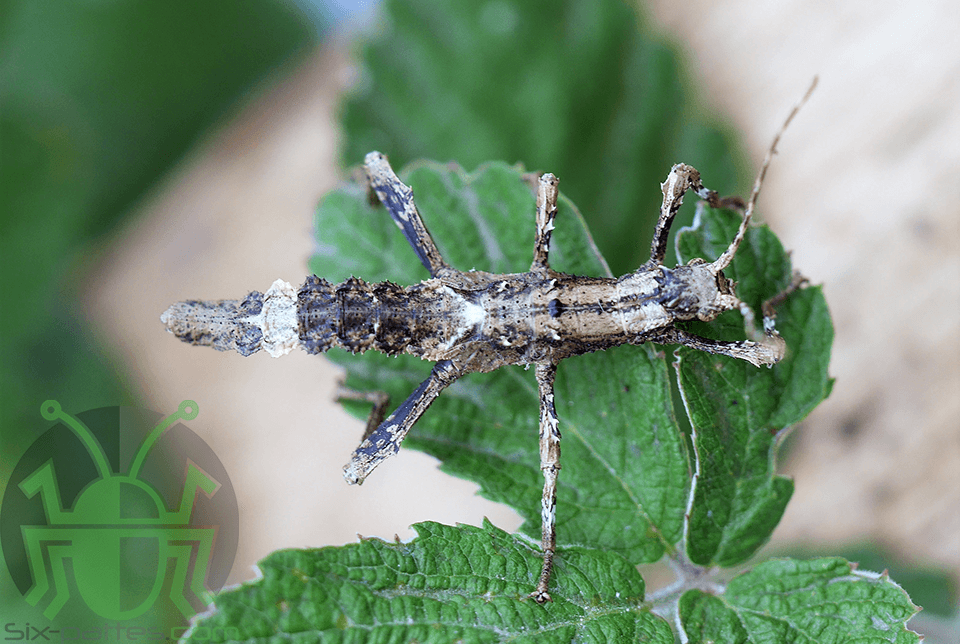
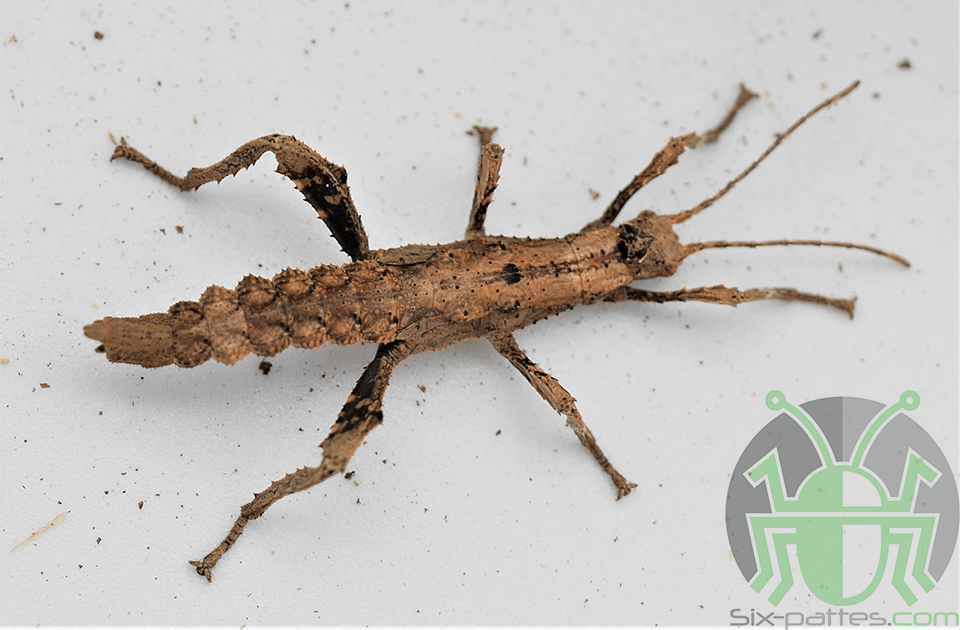
At birth, the young measure about 3 cm and are light brown/grayish in color, then as they grow they darken. From birth, morphological differences are observed between the two sexes. The male has a white spot on the abdomen while the female has an ovipositor, a pointed organ at the end of the abdomen which will be used to bury her eggs.
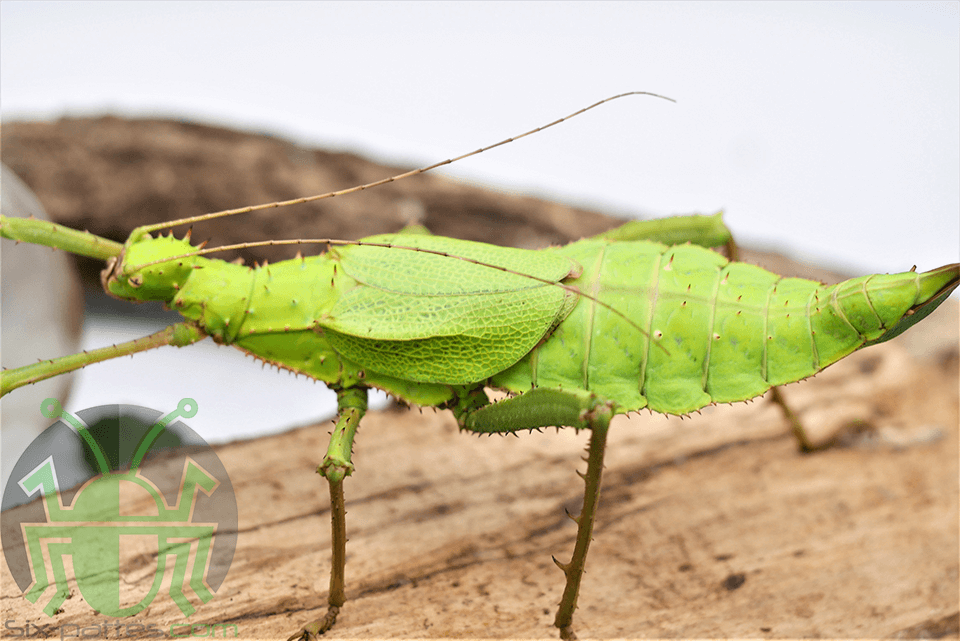
♀Females are very large and measure around 15 cm (without legs).
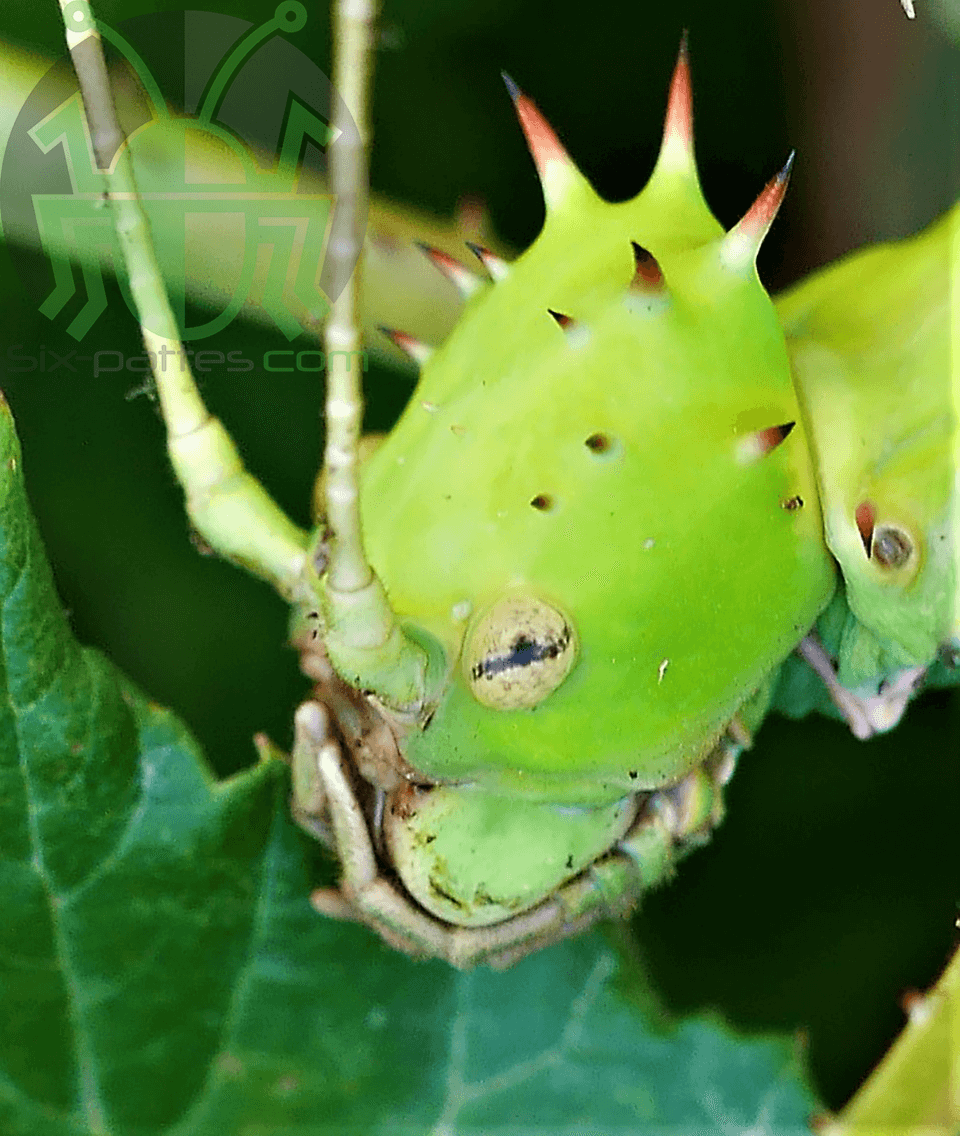
They are much more massive than the males. Their body is bright green, lime green or yellow. The head, body and legs are provided with reddish spines. The green forewings cover slightly shorter membranous hindwings, which are a striking pink colour. However, females are unable to fly, so they use themas a deterrent.
They also have long striped antennae and an ovipositor (egg-laying organ) which allows them to bury their eggs.
♂Malesare smallerand thinner than females.They measure about 12cm (without legs).
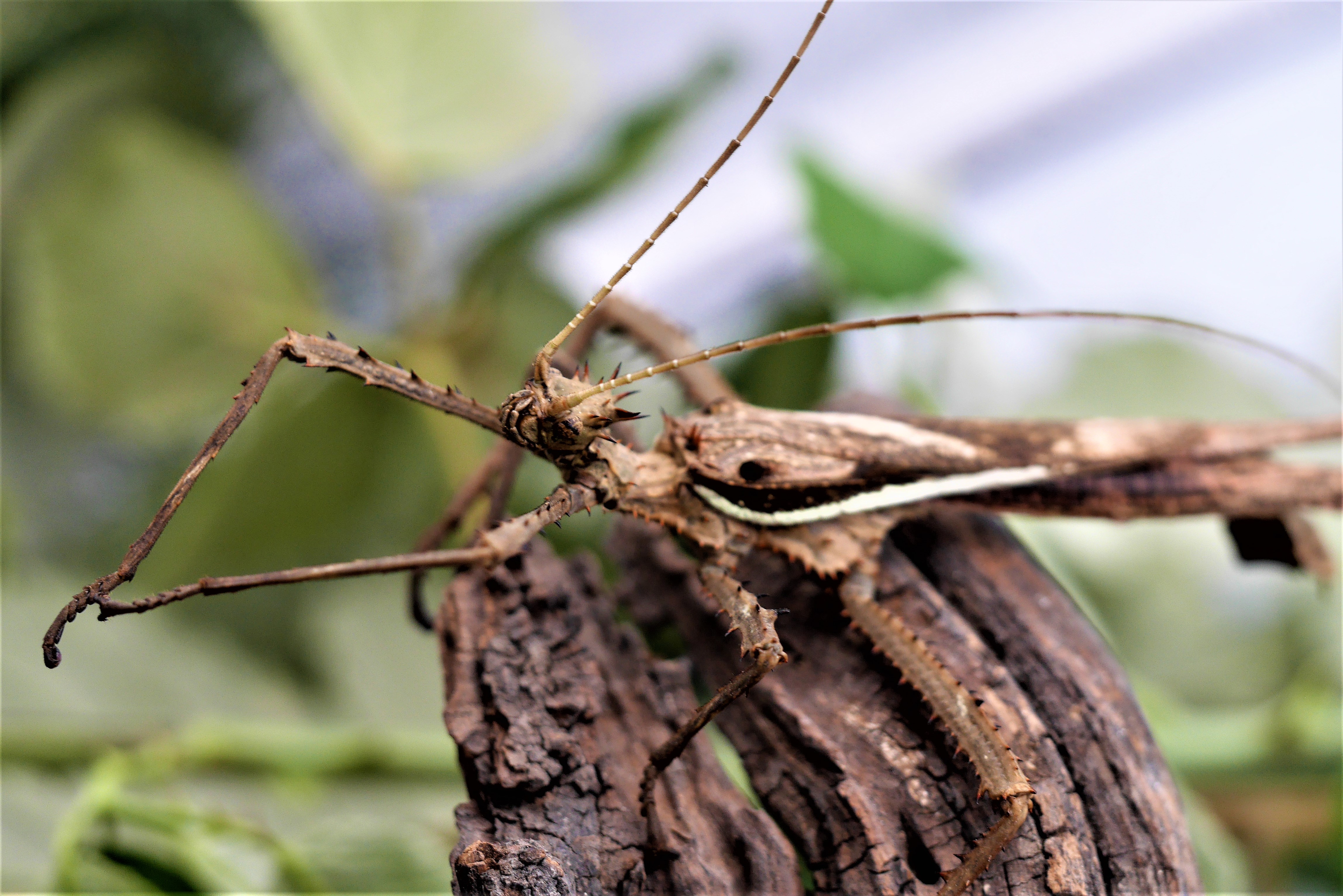
They are usually more or less dark brown in color. Unlike the female, they have large dark pink and black wings and can therefore fly short distances. They have long striped antennae. The head and thorax are covered with small spines.
Difficulty of breeding
Easy
Prolificacy
Not very prolific
Special features:
Easy to breed but not ideal for beginners because of the long cycle and large terrarium required.
Be careful when handling them, their hind legs are sharp with thorns. If they feel threatened, they will take a particular posture and will not hesitate to pinch your fingers! As with all arthropods, to avoid stressing them, they should be handled infrequently and delicately.
Previous
Next
Adult female
Adult male
Previous
Next
Did you know?
The femaleHeteropteryx dilatatacan weigh up to 100 g!Which makes it theheaviest stick insect in the world.
It is alsoone of the largest stick insect species in the world.
In Heteropteryx dilatata, cases ofgynandromorphsare encountered episodically. That is to say, specimens "divided" in two: one side bearing the male organs and the other the female organs.
Place some paper towel at the bottom of the box, moisten it and place the eggs on top. Be careful of the risk of mold.
You place a slice of floral foam at the bottom of the box, moisten it and place the eggs on top.
You place vermiculite at the bottom of the box which you moisten and place the eggs on top.
For young people:
Either you raise them with the adults (be careful when changing food, the young are small and thin) or you raise them separately. You will therefore have to use the same model of terrarium as the adults but of a smaller size.
The floor of the terrarium will be covered with damp paper towels to maintain good humidity and make it easier to maintain the terrarium.
For adults:
The size of the terrarium will depend on the number of specimens. For example, for 1 or 2 couples, plan for a terrarium of at least 40cm x 40cm x 60cm. It is important to have sufficient height for moulting.
In addition, the terrarium must be partially ventilated . For example, with only one side made of mesh and the others made of glass. This will help maintain sufficient humidity.
The floor of the terrarium will be covered with damp paper towels to maintain good humidity and make it easier to maintain the terrarium.
For the female to lay eggs, a nest box must be provided, i.e. a box with at least 6/7 cm of organic potting soil, vermiculite, peat, sand or a mixture with these elements. A shallow container is therefore required so that the laying substrate is accessible.
Mainly bramble. But it is also possible to use rose, raspberry, ivy, hazel, pyracantha, oak, chestnut, eucalyptus, cherry, guava or even hawthorn.
To do this, you need to arrange the branches in the terrarium by placing the stems in a jar of water (to avoid drowning, be sure to block the entrance to the jar with paper towels, for example).
Be careful, it is better to avoid changing food plants during their development.
For the eggs:The incubation medium and the atmosphere must remain humid. To do this, spray a little water whenever necessary. Be careful if it is too dry, either there will be no birth, or the young may not be able to fully emerge from the egg or will be poorly formed.
For young: Humid atmosphere required, approximately 70/90% humidity. Be careful if it is too dry, the moults will be missed. Humidity can be provided by the food plant thanks to the foliage. Otherwise, you must spray a little water as soon as necessary.
For adults:Humid atmosphere required, about 70/80% humidity. They can tolerate slightly lower humidity. Humidity can be provided by the food plant through the foliage. Otherwise, spray a little water as needed.
Lighting:Lighting is optional if the ambient light is sufficient. Otherwise, additional lighting will be required.
Newborn male
Newborn female
02. Its development
The eggs
Laying method: A female laden with eggs has a distended and voluminous abdomen. At night she buries her eggs one by one in the substrate using her ovipositor.
Laying frequency: A female can lay around a hundred eggs (1 to 2 eggs per night)
Egg collection: As soon as possible or each time the terrarium is cleaned and the bottom paper towel is changed. It is therefore necessary to search the substrate of the laying box in order to extract the eggs and then place them in the incubator.
Incubation period: Very long: 11 months to almost 2 years. It is therefore necessary to ensure good humidity and that there is no development of mold.
The young people
Developmenttime: Very slow growth. From 10 months to 1 year.
Number of stages: 6 moults for the male and 7 moults for the female. This complicates its breeding because the male is adult more quickly than the female and it lives less long. It is therefore necessary to ensure that they are adults at the same time.
Means of defense: In case of danger, the young people drop to the ground and play dead for several minutes! This is called thanatosis or mock death.
Adults
Reproduction: Sexual or parthenogenetic. Mating can last for many hours. The male will remain on the female's back.
However, if the female has not met a male, she will lay unfertilized eggs. These will only give birth to females.
Means of defense: As soon as they feel threatened they take a defensive posture. They raise their abdomen as well as their hind legs covered with sharp spines and try to pinch by folding their legs. They also have (especially for the female) the particularity of emitting a rustling sound by rubbing their wings.
Activity :The male will reach maturity after about two or three weeks and the femalewill start laying about 1 month after her last moult.This species is nocturnal.During the day it will remain in the position it was in at dawn.
Lifespan: The lifespan of the male is about 5 months and for the female about 8 months.


(1).png)