Magnificent endemic species of Madagascar and the Comoros. The Antherina suraka suraka is one of the most common Saturniidae in the Great Island. The subspecies Antherina suraka comorana is only found in the Comoros. It is larger in size and has less pronounced colors and shapes. In its natural habitat, this lepidopteran is found in humid forests as well as drier areas.
Introduction to breeding facilities only dates back a few years. From caterpillar to butterfly, it will impress you with its colors and shapes.
Keeping butterflies at home usually requires specialized equipment such as an aviary, tropical plants with flowers, and complex breeding conditions. This Saturniidae species, on the other hand, is much easier to maintain.
In Madagascar, these butterflies are also raised for silk production.
Breeding difficulty
Easy20%
1. Small introduction
Not so "dumb"
This butterfly has a quite surprising self-defense behavior. When feeling threatened or disturbed, they move their wings to reveal the two eyespots on the hind wings. Two "eyes" appear and scare off its predators.
It is a species that is very easy to maintain because unlike other butterflies, they hardly fly and do not feed. Their sole purpose is to reproduce to ensure offspring. Time is short as they will only live for a few days...
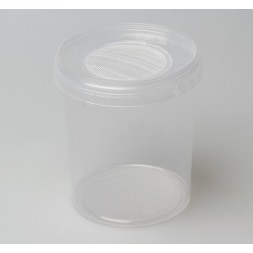
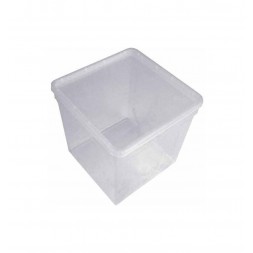
Eggs can be kept in closed plastic containers with sufficient ventilation (very fine mesh) to prevent the growth of mold. The goal is to maintain a very humid atmosphere while preventing the caterpillars from escaping at birth.
The chrysalises will be placed directly in the aviary. They will be suspended from branches or hung up high. The goal is to give them enough space at birth so that the butterflies can properly expand their wings.
The chrysalises and the aviary need to be kept moist.
Adults will be directly in the aviary from birth. They fly very little but need a surface to perch on.
The aviary will be adapted according to the number of individuals and must be well-ventilated but humid. For example, for two pairs, our 40x40x60 aviary is a minimum. Be careful, if the aviary is too large, the pairs may not meet... you know the result.
It is not necessary to place the host plant in the aviary. If not, the eggs will be laid and attached directly to the aviary.
The egg is ovoid in shape and measures about two millimeters in diameter. It is pinkish-brown in color. Care must be taken during harvesting to avoid damaging the eggs, as the butterflies use a "glue" to attach them to the surface.
Incubation period: 8 to 10 days at room temperature (20/21°C).
Upon hatching, the caterpillars are black with yellow/orange protrusions and measure about 6/8mm.
The caterpillar will molt, shedding its "skin" in order to grow. It will be born at stage L1, then with each molt, a new stage will be added (up to stage L5).
The young gregarious caterpillars start to disperse from stage L3.
At stage L3, the caterpillar will start to turn green while retaining its yellow/orange protrusions.
At stage L4, the caterpillar turns green with red protrusions.
At stage L5, the final stage, the caterpillar remains green with red protrusions but also develops black pigments around the spiracles. It measures 7 to 9 centimeters.
Before spinning its cocoon, it will slightly change color, and its rings will become slightly dark green.
Development duration: about 1 month (with high temperature and frequent humidity). The duration also depends on the rearing temperature. With higher temperature, development is slightly faster.
Chrysalises are made with white silk threads. The elaboration of this cocoon can be done either on the branches of the host plant or directly on the ground (in a paper towel). The silk is very strong but the weaving remains coarse. In the presence of humidity, the cocoons will turn brown.
Adults do not feed and have the particularity of orienting their abdomen to the left. The female is larger than the male. The male has less distinct white bands.
The mating lasts several hours and the female can lay around 200 eggs. The fertilized female lays eggs on the same day and continues until her death.
This species has a short biological cycle (2.5 to 3 months) allowing for 4 to 5 generations per year.
Adult lifespan: 7 to 10 days.
4. Plants nourishing
A little bit of greenery...
The main food plants are the oleander (Nerium oleander) and the privet (Ligustrum). However, it is possible to rear them with leaves from fruit trees or even with Crataegus, Eugenia, Fagus, Liquidambar, Maesa, Salix, Schinus, Strophanthus, Vitis vinifera.
It is essential that the food be fresh. To keep it longer, it is advisable to place the stems in a small container of water. Be careful, caterpillars should not be able to get in, otherwise there is a high risk of drowning.


.png)





.jpg)
.png)
.png)


